Courses,
Blog,
Contact.
Join for Free
Courses,
Blog,
Contact.
Visit branded by
Reach Us
First & Last Name
Email Address
How Did You Find Us
Select one...
Google
Tiktok
Instagram
LinkedIn
Recommendation
AI Search
Additional details
Reach out to us and we will be in touch within 24 business hours.
Submit
Thank you! Your submission has been received!
Oops! Something went wrong while submitting the form.
The Brand University Reading Room
What I'd Tell a Designer Starting Their Agency Today
Honest advice for designers starting a design agency: charge more sooner, always use a contract and deposit, say no early, document from day one, and build relationships.
Sep 9
Evan Barnes
Building a Team Culture Before You Have a Team
Why solo designers should define team culture before hiring: your current habits become the template, so write real values, decide how mistakes are handled, and build systems.
Sep 7
Evan Barnes
Playing the Long Game in a Portfolio Career
Why a freelance design career is a long game: how to handle slow months, let skills and relationships compound, protect your reputation, and accept the zigzags.
Sep 3
Evan Barnes
Celebrating Small Wins When the Big Ones Take Years
Why designers should celebrate small wins when big milestones are years apart, and a simple weekly practice to track progress and stay motivated.
Sep 2
Evan Barnes
Staying Creative When Every Week Looks the Same
How designers stay creative when every week looks the same: spot autopilot early, protect unstructured time, use constraints, change inputs, and allow rough drafts.
Sep 1
Evan Barnes
What to Do With Rejection That Actually Helps
How designers can use rejection productively: separate the sting from the signal, ask why you lost, look for patterns, and avoid overcorrecting from one lost pitch.
Aug 31
Evan Barnes
Why Comparing Your Agency to Someone Else's Highlight Reel Lies to You
Why comparing your design agency to others online distorts reality, and how to use admiration as a specific prompt and measure against your own past instead.
Aug 28
Evan Barnes
Setting Work-Life Boundaries When Clients Text at 9pm
How freelance designers set work-life boundaries with clients who text at night: state hours upfront, choose slower channels, wait to reply, and revisit limits over time.
Aug 25
Evan Barnes
The Art of Saying No to the Wrong Project
How designers can say no to the wrong project: define your criteria, pause before yes, decline respectfully, refer the client elsewhere, and make room for better work.
Aug 24
Evan Barnes
Imposter Syndrome and the Designer Who Won't Raise Prices
How imposter syndrome shows up as underpricing for designers, why more evidence rarely fixes it, and practical steps to raise your prices with confidence.
Aug 21
Evan Barnes
Turning Client Wins Into a Marketing Engine
Turn every finished client project into case studies, LinkedIn posts, and newsletter content with a simple capture system any design agency can run.
Aug 13
Warren Coppage
Building a Community Around Your Agency's Niche
How to build a community around your design agency's niche that compounds over time: pick a narrow focus, start small, and let members help each other.
Aug 12
Warren Coppage
Do Industry Awards Actually Bring in Clients
Do design awards bring in clients? An honest look at who awards actually influence, what they cost, and when niche recognition is the better bet.
Aug 9
Warren Coppage
Speaking at Local Events to Build Agency Authority
How designers and agency owners get booked to speak at local events, what to talk about, and how to turn one talk into real client relationships.
Aug 8
Warren Coppage
Getting Booked as a Podcast Guest in Your Niche
How designers get booked as podcast guests: target small niche shows, pitch a specific story, research the host, and turn one episode into lasting reach.
Aug 3
Warren Coppage
An Email Newsletter That Clients Actually Open
How to build an agency email newsletter clients actually open: write for their problems, keep a narrow focus, use specific subject lines, and send consistently.
Aug 1
Warren Coppage
Local SEO Basics for a Design or Marketing Agency
Local SEO basics for design and marketing agencies: Google Business Profile, consistent listings, reviews, location pages, and how AI search uses all of it.
Jul 28
Warren Coppage
Building Referral Partnerships With Non-Competing Agencies
How design agencies build referral partnerships with copywriters, photographers, and SEO pros: map adjacent partners, refer first, and stay in touch.
Jul 27
Warren Coppage
Content Marketing for Agencies Too Busy to Write
A realistic content marketing system for agency owners too busy to write: repurpose client work, answer real questions, batch sessions, and use AI for drafts.
Jul 26
Warren Coppage
Building a Personal Brand on LinkedIn as a Designer
How designers build a personal brand on LinkedIn that brings in clients: post real project stories, show your process, stay consistent, and engage daily.
Jul 23
Warren Coppage
Taxes and Insurance: The Boring Stuff That Protects You
Tax and insurance basics for freelance designers and small agencies: set aside taxes from every payment, understand quarterly estimates, and carry the right coverage.
Jul 18
Evan Barnes
The Contract Clauses Every Freelancer Skips, and Shouldn't
The contract clauses freelance designers skip: scope with exclusions, revision limits, kill fees, late payment terms, and ownership that transfers on final payment.
Jul 17
Evan Barnes
Systemizing Delivery So Quality Doesn't Depend on You
How to systemize design delivery so quality doesn't depend on the owner: define what good means, add checkpoints, use a QA checklist, and standardize client touchpoints.
Jul 15
Evan Barnes
Avoiding Burnout When You're the Whole Agency
How solo designers avoid burnout when they are the whole agency: spot early signs, block creative time, set a real stopping point, and delegate before you're desperate.
Jul 6
Evan Barnes
What to Delegate First When You're Ready to Grow
What solo designers should delegate first when ready to grow: low-skill, high-frequency tasks before core creative work, in layers, with simple documentation.
Jul 3
Evan Barnes
Standard Operating Procedures: Where to Start
Where a small design agency should start with SOPs: document what breaks when you're away, write the real process, keep it short, and start with client-facing work.
Jun 29
Evan Barnes
Time Tracking Without Making Your Team Hate You
How to use time tracking in a design agency without resentment: explain why, track at the project level, make logging effortless, and use the data to protect the team.
Jun 28
Evan Barnes
The Project Management Tool Stack for a Small Agency
A simple project management tool stack for a small design agency: what the tools must do, a basic board structure, client-facing views, a weekly rhythm, and a CRM.
Jun 27
Evan Barnes
Subcontractors vs. Employees: What Actually Scales
Subcontractors vs employees for a growing design agency: subcontractors scale capacity, employees scale consistency, and most agencies need a core team plus overflow.
Jun 26
Evan Barnes
Hiring Your First Employee vs. Your First Contractor
Hiring your first employee vs your first contractor as a designer: what defines each, when each makes sense, why cost alone misleads, and when to get professional advice.
Jun 25
Evan Barnes
The Homepage Test: What a Visitor Should Know in Five Seconds
The 5-second homepage test: how to check whether visitors instantly understand what you do, who it's for, and what to do next, and how to fix it if not.
Jun 16
Warren Coppage
Website Maintenance Retainers: What to Include and Charge
What to include in a website maintenance retainer, how to structure tiers, how to price it so it covers your time, and when to sell it to clients.
Jun 15
Warren Coppage
Forms Are a Conversion Feature, Not an Afterthought
How to design website forms that convert: cut fields, use visible labels, write specific errors, design the confirmation, and track every submission.
Jun 11
Warren Coppage
Landing Pages That Convert Before You Scroll
How to design a landing page that converts above the fold: answer three questions instantly, write a specific headline, show proof, and use one clear CTA.
Jun 10
Warren Coppage
Webflow vs. WordPress for Client Projects
Webflow vs WordPress for client projects: an honest comparison of design fidelity, build speed, client editing, plugins, maintenance, and when to pick each.
Jun 8
Warren Coppage
Designing Mobile-First Without Losing the Desktop Experience
How to design mobile-first without a weak desktop site: why starting small works, how to give desktop its own design pass, and how to test on real devices.
Jun 7
Warren Coppage
Accessibility Isn't Optional: A Practical Starting Point
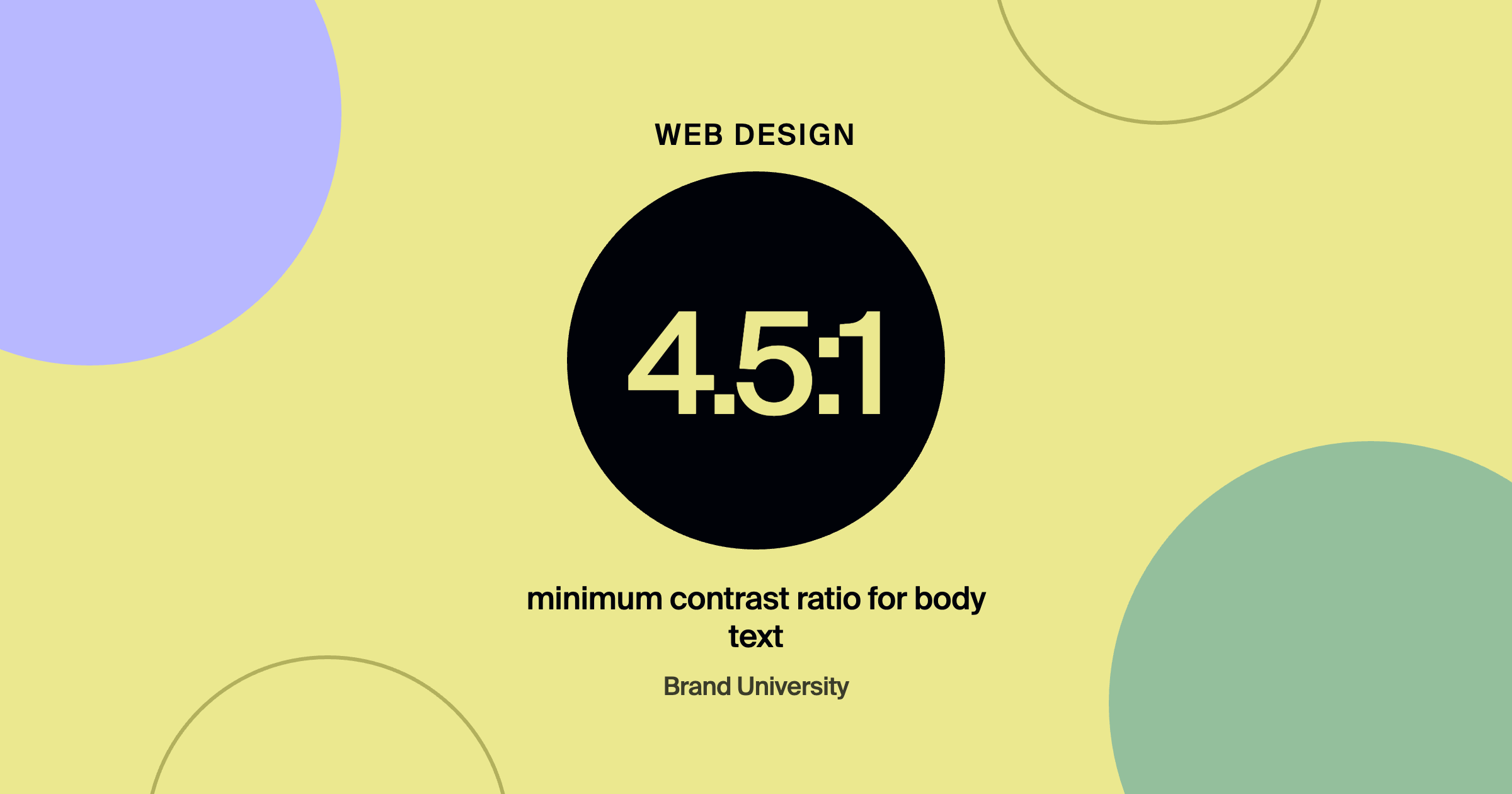
A practical web accessibility starting point for designers: color contrast, alt text, keyboard navigation, focus states, and not relying on color alone.
Jun 6
Warren Coppage
Page Speed Basics Every Designer Should Know
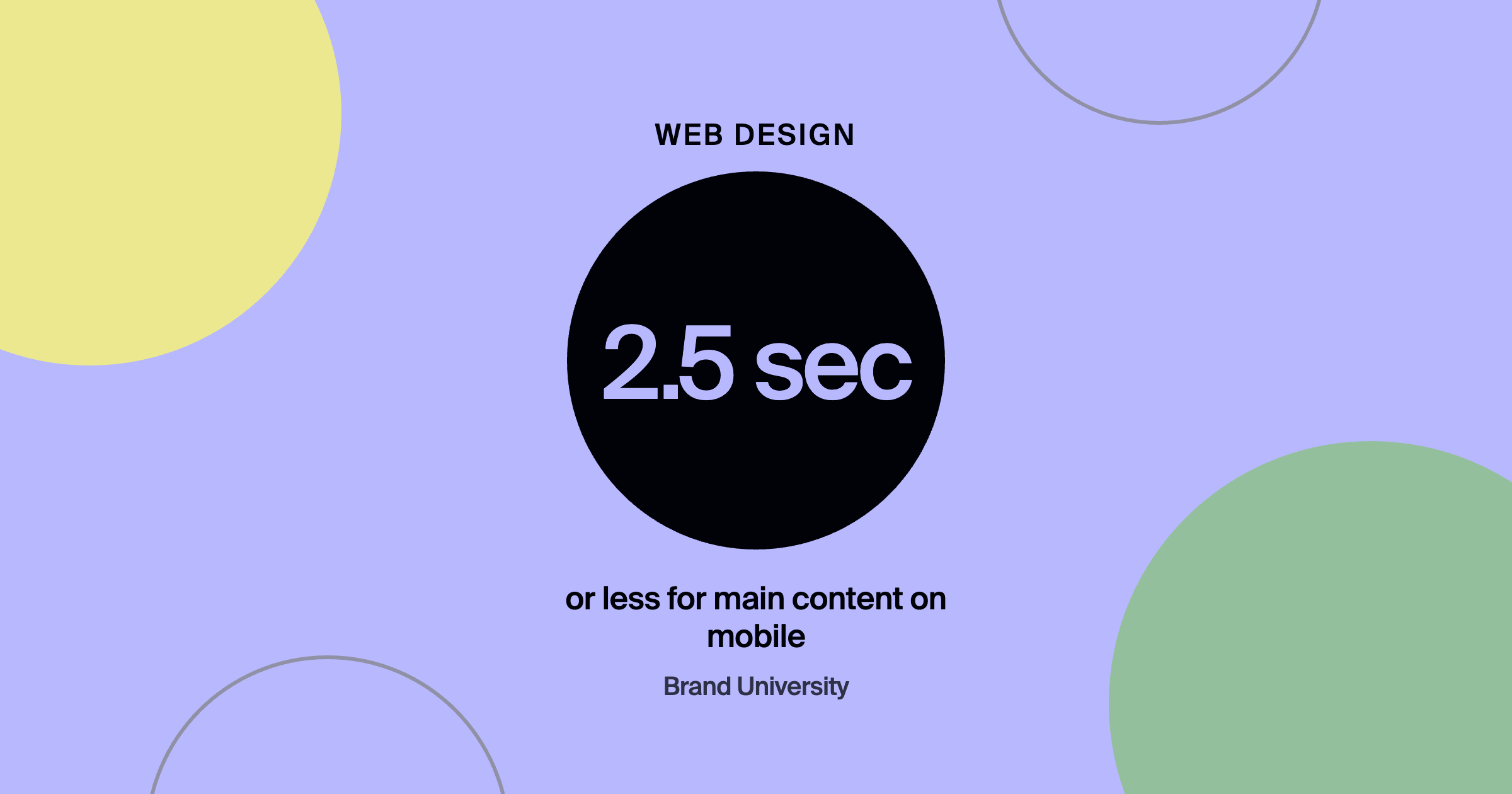
Page speed basics for designers: compress images, limit fonts and animations, test on real mobile connections, and explain speed to clients as lost leads.
Jun 5
Warren Coppage
Writing Website Copy When You're Not a Copywriter
How designers can write solid website copy without being copywriters: use the client's words, lead with benefits, cut hard, read aloud, and know when to hire.
Jun 4
Warren Coppage
Structuring a Website Around One Action, Not Ten
Why a website should be structured around one primary action: how to choose it, make it visually dominant, simplify navigation, and resist adding more.
Jun 1
Warren Coppage
Mood Boards That Lead Somewhere, Not Everywhere
How to build a brand mood board that leads to a clear direction: start from strategy, curate 8 to 12 images, add words, caption each image, and present one direction.
May 31
Evan Barnes
How to Run a Competitor Audit That's Actually Useful
How to run a competitor audit that shapes brand strategy: pick competitors by audience overlap, find the category pattern, identify the gap, and write a one-page conclusion.
May 27
Evan Barnes
Writing a Positioning Statement That Isn't Generic
How to write a brand positioning statement that isn't generic: remove table-stakes claims, name a specific audience, state the tradeoff, and test it without the brand name.
May 25
Evan Barnes
Finding a Brand's Voice Before You Touch a Single Word
How to define a brand voice that's actually usable: go past adjectives with contrast pairs, anchor it to real examples, test it on hard cases, and store it where writers look.
May 24
Evan Barnes
Five Signs a Business Actually Needs a Rebrand
Five signs a business actually needs a rebrand, not just a refresh: the business changed, the brand costs deals, it can't scale, there's no system, or it's only fatigue.
May 21
Evan Barnes
Choosing Typography That Holds Up at Every Size
How to choose brand typography that holds up at every size: test small sizes first, pick families with full weight ranges, check licensing, and limit the system to two.
May 20
Evan Barnes
Color Psychology, Minus the Pseudoscience
An honest approach to brand color psychology: color meaning is mostly learned, context and contrast matter more than hue, study the category, and test in real applications.
May 17
Evan Barnes
How Many Logo Variations Does a Client Really Need
How many logo variations a client needs: a primary horizontal lockup, a stacked version, an icon, and a one-color version, plus when to add more and how to deliver them.
May 12
Evan Barnes
Building a Style Guide Clients Will Actually Use
How to build a brand style guide clients will actually use: design it for non-designers, keep it short, show real applications, use a living format, and walk them through it.
May 9
Evan Barnes
Brand Strategy Before Brand Design: What Comes First
Why brand strategy comes before brand design: what strategy includes, why skipping it produces brands that look good and mean nothing, and how to sell strategy to clients.
May 8
Evan Barnes
Why Your Best Leads Come From Clients You Already Have
Why existing clients are a design agency's best source of new business, and how to find upsells, stay visible between projects, and ask what's next.
May 7
Warren Coppage
The Follow-Up Email That Turns a Maybe Into a Yes
How to write a follow-up email that turns a maybe into a yes: add new value, address the real hesitation, make the next step easy, and close the loop.
May 6
Warren Coppage
Negotiating Scope Without Negotiating Price
How to negotiate scope instead of price when a client pushes back on cost: separate the two, offer a smaller complete project, phase the work, protect the core.
May 5
Warren Coppage
Writing a Case Study That Sells the Next Project
How to write a design case study that sells the next project: open with the business problem, show your thinking, lead results with numbers, and use it everywhere.
Apr 30
Warren Coppage
What Your Portfolio Should Prove, Not Just Show
What a design portfolio should prove to close clients: the business problem, your thinking, measurable results, and relevance to the prospect's situation.
Apr 29
Warren Coppage
Cold Outreach for Designers Who Hate Cold Outreach
Cold outreach for designers who hate cold outreach: pick a narrow list, open with something specific, offer one useful observation, and ask a small question.
Apr 28
Warren Coppage
Building a Referral System That Actually Produces Leads
How designers build a referral system that reliably produces leads: ask at the right moment, give clients the words, thank referrers, and track every source.
Apr 27
Warren Coppage
Handling the "Can You Do It Cheaper" Objection
How to handle the can you do it cheaper objection without discounting: find the real concern, reconnect price to value, and offer scope, not a lower rate.
Apr 26
Warren Coppage
Following Up Without Sounding Desperate
How to follow up on a proposal without sounding desperate: add new value, skip apologies, use a set cadence, send a clean close-out, and track open deals.
Apr 25
Warren Coppage
The One-Page Proposal That Closes Faster Than a Deck
Why a one-page proposal closes faster than a slide deck, what belongs on it, how fast to send it, and when a longer deck is actually worth it.
Apr 20
Warren Coppage
How to Handle a Client Who Wants to Skip the Process
How to handle a client who wants to skip discovery and strategy: understand why, explain the process in business terms, offer a compressed version, and know when to walk.
Apr 19
Evan Barnes
Turning a Finished Project Into a Testimonial That Sells
How designers get testimonials that sell: ask at the right moment, use specific questions, offer to draft it, get permission, and place it where prospects decide.
Apr 15
Evan Barnes
Onboarding a New Client So the Project Starts Strong
A client onboarding sequence for designers: welcome packet, kickoff call, shared workspace, clear timeline and responsibilities, and a first-week check-in.
Apr 14
Evan Barnes
The Silent Client: Getting Feedback From Someone Who Won't Give It
How to get feedback from a silent client: present live, ask specific questions, give simple choices and deadlines, and follow up with a clear default next step.
Apr 11
Evan Barnes
What to Say When a Client Hates the Design
What to say when a client hates the design: stay calm, ask what specifically isn't working, reconnect to the strategy, separate taste from goals, and agree on next steps.
Apr 9
Evan Barnes
Setting Client Expectations in the First Week, Not the Last
What to cover with design clients in week one to prevent frustration later: scope, timeline, feedback process, communication, responsibilities, and how changes are handled.
Apr 8
Evan Barnes
How Many Revision Rounds Should You Actually Offer
How many revision rounds designers should offer: usually two or three per phase, clearly defined, with a price for extra rounds and consolidated feedback rules.
Apr 6
Evan Barnes
Keeping Scope Honest: A Simple Change Order System
A simple change order system for designers: define scope, spot new requests, send a one-page change order with cost and timeline, get approval, then do the work.
Apr 4
Evan Barnes
How to Fire a Client Without Burning the Bridge
How to fire a design client without burning the bridge: decide clearly, check the contract, end at a natural point, communicate calmly, hand off cleanly, and offer referrals.
Apr 3
Evan Barnes
Five Red Flags a Client Will Be a Nightmare Before You Sign
Five red flags a design client will be difficult before you sign: price haggling first, no clear decision-maker, rushed timelines, bad-mouthing past designers, and resisting process.
Apr 2
Evan Barnes
The Real Cost of a $500 Logo (And Why Clients Don't See It)
The real cost of a $500 logo: no strategy, no system, inconsistent use, lost trust, and a second rebrand later. How designers can explain the difference to clients.
Mar 31
Evan Barnes
When to Walk Away From a Client Who's Too Cheap
When designers should walk away from a client who's too cheap: know your floor, spot value-blind buyers, offer scope first, and decline gracefully when it doesn't fit.
Mar 28
Evan Barnes
Pricing Retainers So They Actually Cover Your Time
How to price design retainers so they cover your time: estimate a realistic month, add buffer, define what's included, cap requests, and review the numbers quarterly.
Mar 23
Evan Barnes
Package Pricing vs. Custom Quotes: Which Builds a Better Agency
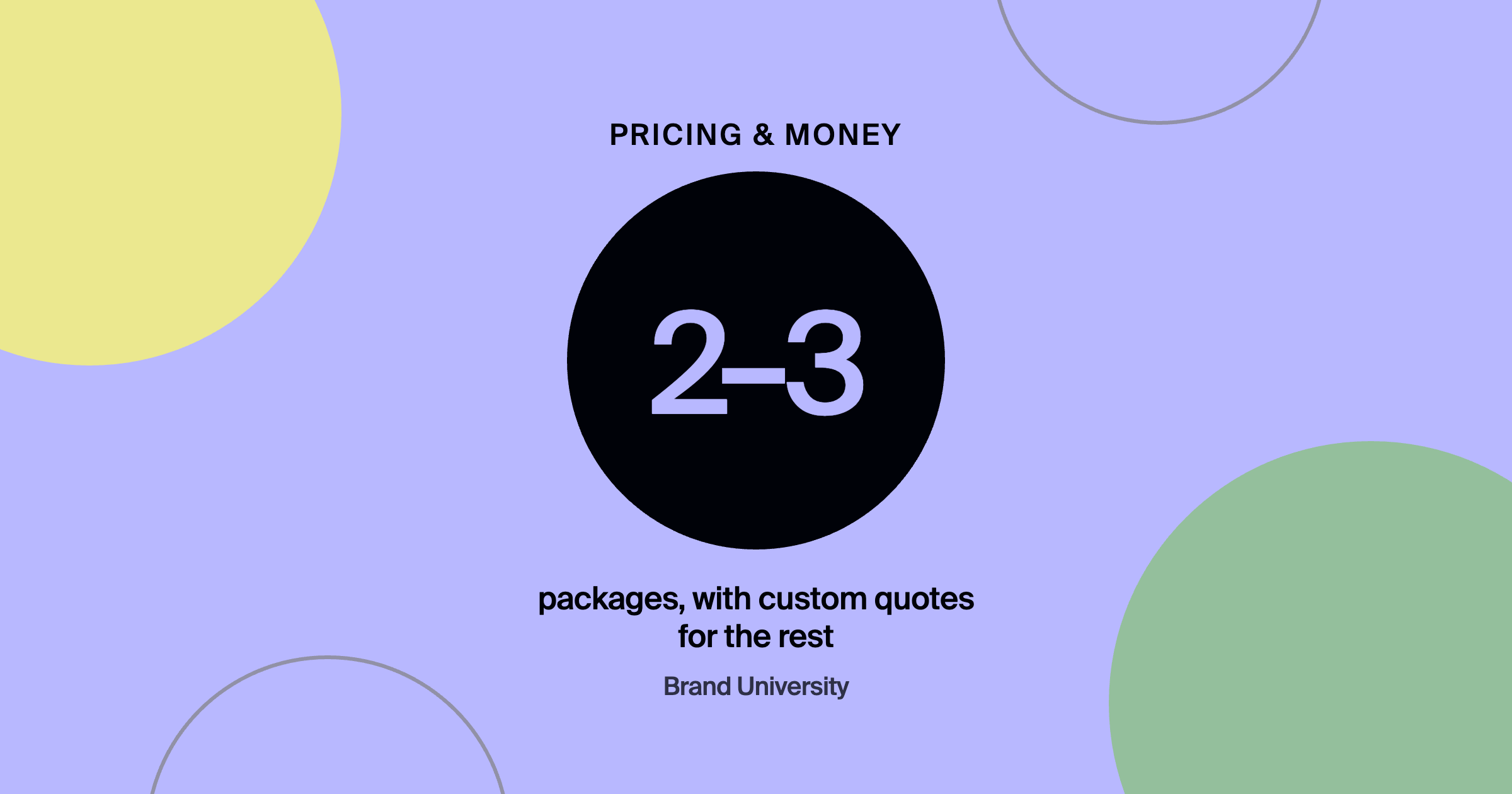
Package pricing vs custom quotes for design agencies: packages scale and simplify sales, custom quotes flex for complex work, and most agencies need both in the right order.
Mar 22
Evan Barnes
The Discount Trap: Why Cutting Your Price Never Wins the Deal
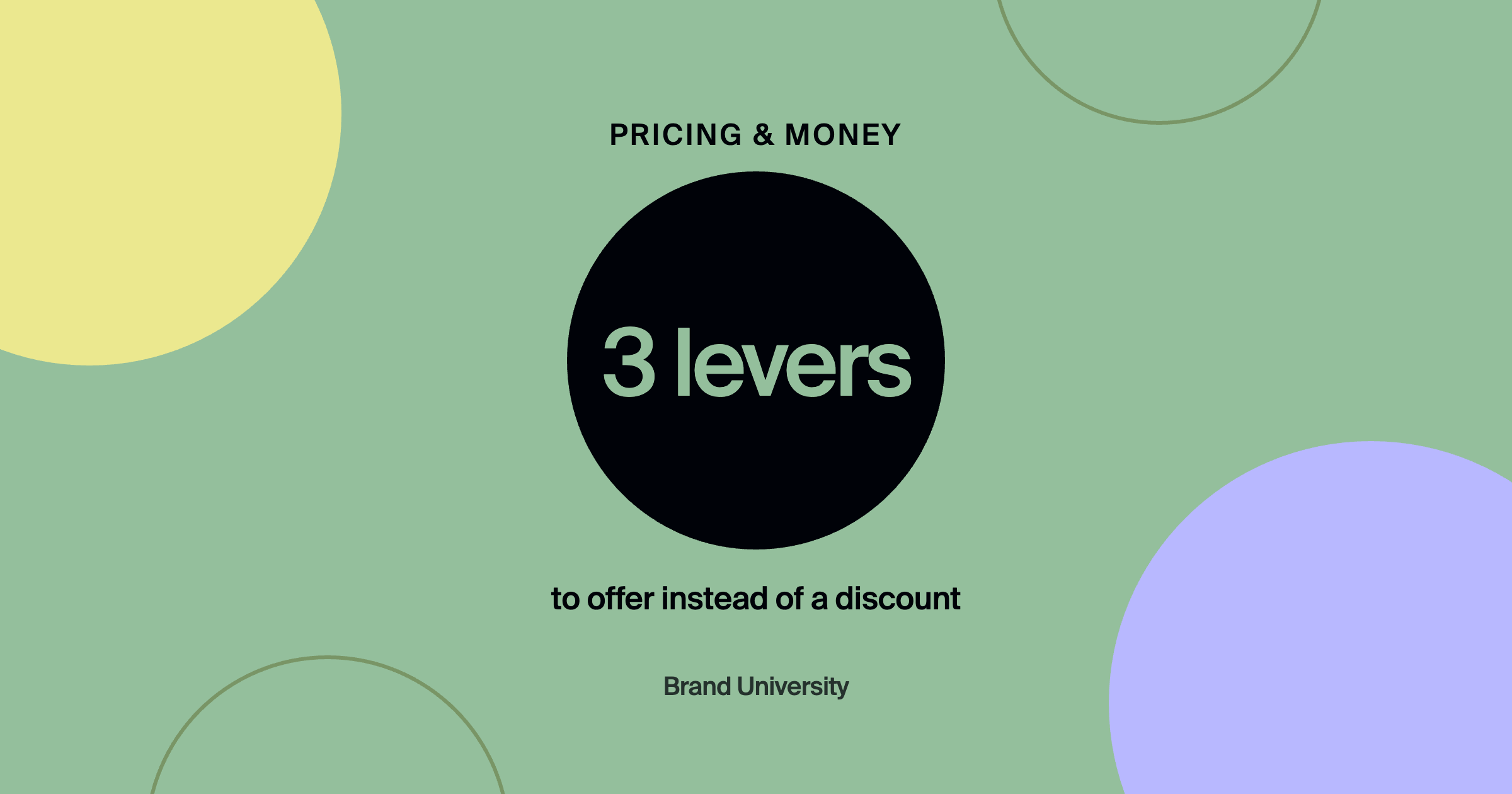
Why discounting rarely wins design deals: it signals your price wasn't real, anchors future work, erodes margin and respect. What to offer instead of a discount.
Mar 21
Evan Barnes
Why You Should Always Ask for a Deposit (And How Much)
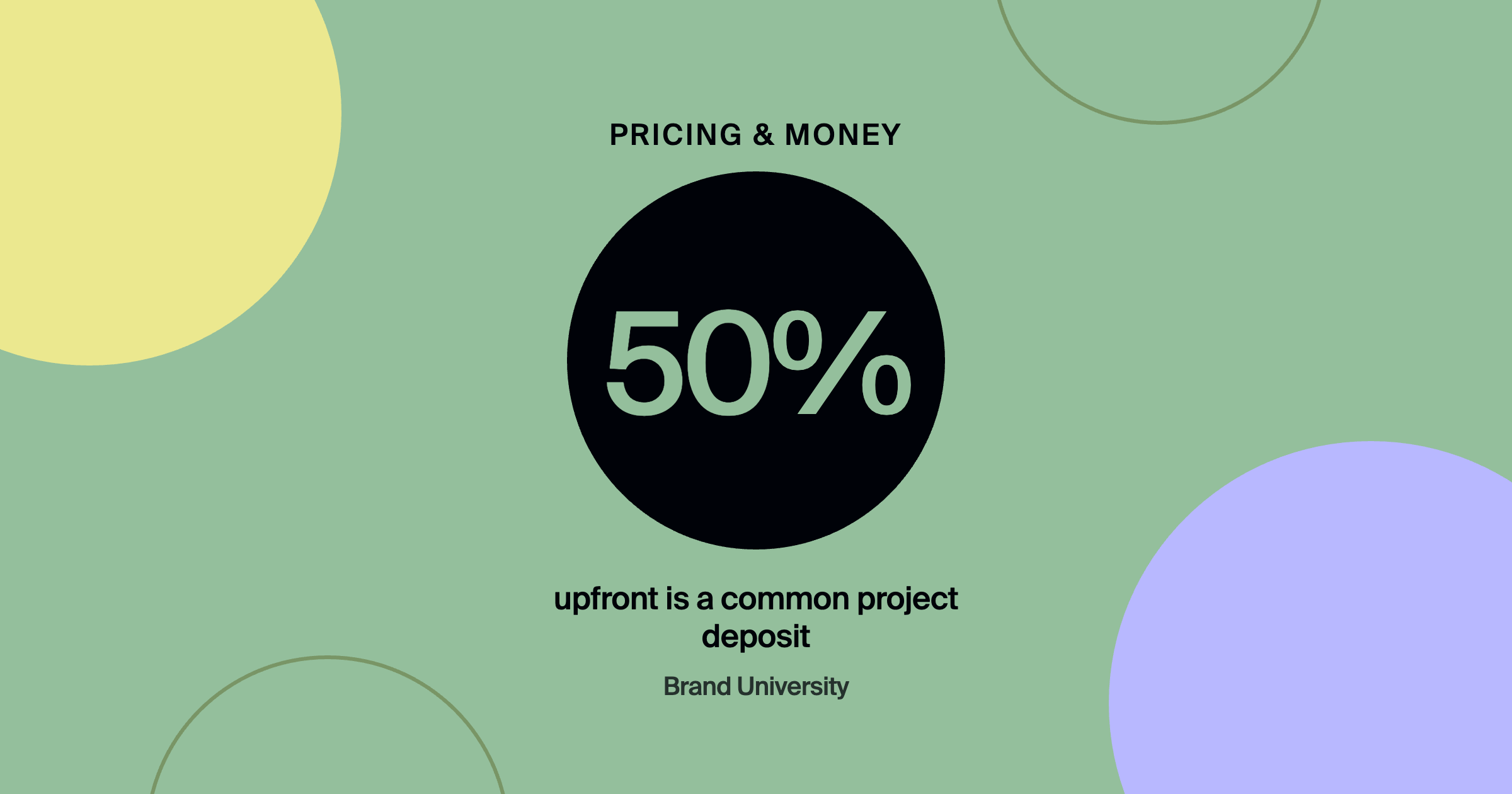
Why designers should always ask for a deposit and how much: deposits protect cash flow, filter unserious clients, and signal professionalism. 50 percent is a common starting point.
Mar 20
Evan Barnes
What to Do When a Client Won't Pay on Time
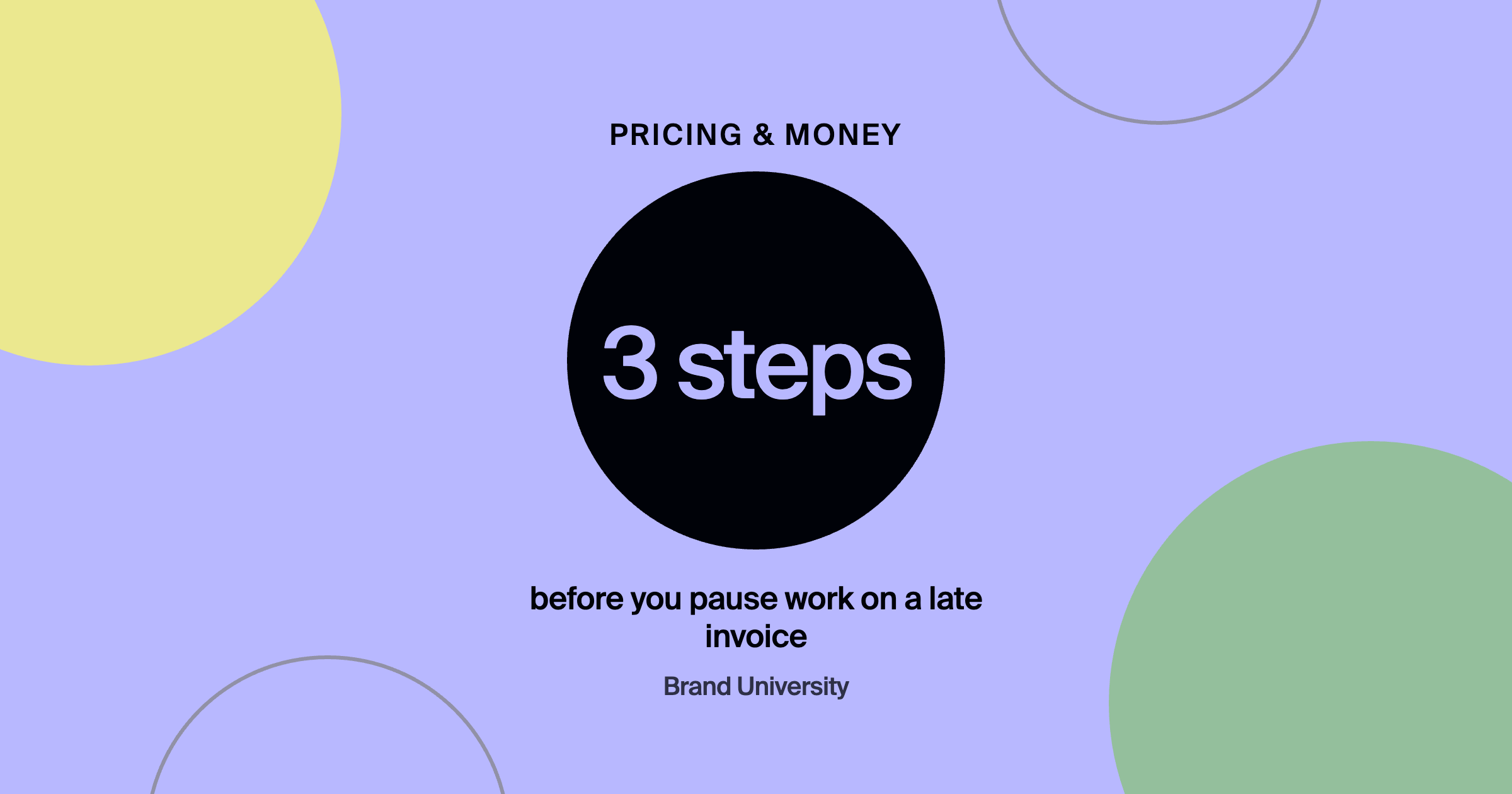
What designers should do when a client won't pay on time: prevent it with deposits and clear terms, send friendly reminders, pause work, and escalate calmly if needed.
Mar 19
Evan Barnes
The Scope Creep Playbook: How to Spot It and Shut It Down
The scope creep playbook for designers: define scope with exclusions, spot creep early, respond with a friendly yes-and-here's-the-cost, use change orders, and track it.
Mar 18
Evan Barnes
Value-Based Pricing: Charging for the Outcome, Not the Hours
Value-based pricing for designers: price the outcome instead of hours, uncover the business value in discovery, anchor to results, and offer tiered options.
Mar 17
Evan Barnes
How to Raise Your Prices Without Losing the Client
How designers raise prices without losing clients: raise for new clients first, give existing clients notice, explain the value, offer options, and hold steady.
Mar 12
Evan Barnes
How to Add a Google Ads Retainer to Your Design Agency in One Day
How designers add a Google Ads management retainer in one day: a repeatable account structure, a simple report, flat-fee pricing, and the pitch at launch.
Sep 10
Warren Coppage
How We Build 5-Figure Websites in 6 Weeks
The six-week framework for building a 5-figure website on time: lock the brief, wireframe first, one design direction, build, then QA and launch.
Sep 10
Warren Coppage
The High Ticket Closer's Guide to Discovery Calls
How designers run discovery calls that close high-ticket clients: open with their world, dig past the first answer, let them name the cost of inaction, then price.
Sep 10
Evan Barnes
How to Design a Logo When You Have No Ideas
How to design a logo when you have no ideas: write words first, study why reference marks work, sketch 15 bad ideas, build one direction three ways, then test small and in one color.
Sep 10
Evan Barnes
Why Most Designers Are Undercharging (And It Has Nothing to Do With Skill)
Why talented designers undercharge and it isn't skill: clients price risk, not talent. Four things that raise your price: a niche, a named process, proof, and confidence.
Sep 10
Evan Barnes
The Designers Booklet of Operations: How to Run and Grow Your Agency Day-to-Day
The design agency operations playbook: document four pillars (acquisition, delivery, finances, team), run a simple weekly rhythm, and treat systems as time you get back.
Apr 13
Evan Barnes
How I Made 6 Months of Social Content in One Day Using Figma, Hopper HQ + ManyChat
How a designer made 6 months of social content in one day: batch posts from portfolio work in Figma, bulk schedule in Hopper HQ, and turn comments into leads with ManyChat.
Apr 13
Evan Barnes
How to Outsource Like a Real Agency Owner (and Why the BU Creator Board Changes Everything)
How to outsource like a real design agency owner: what to hand off first, where to find vetted designers including the BU Creator Board, how to brief well, and the math behind it.
Apr 13
Evan Barnes
Claude + Webflow: How to Build and Edit Websites Faster Than Your Clients Can Brief You
How designers use Claude with Webflow to ship client sites faster: CMS setup, bulk content updates, SEO audits, and content drafting, with setup steps and example prompts.
Apr 13
Evan Barnes
Claude + Notion: How to Build Unbeatable Systems for Your Design Agency
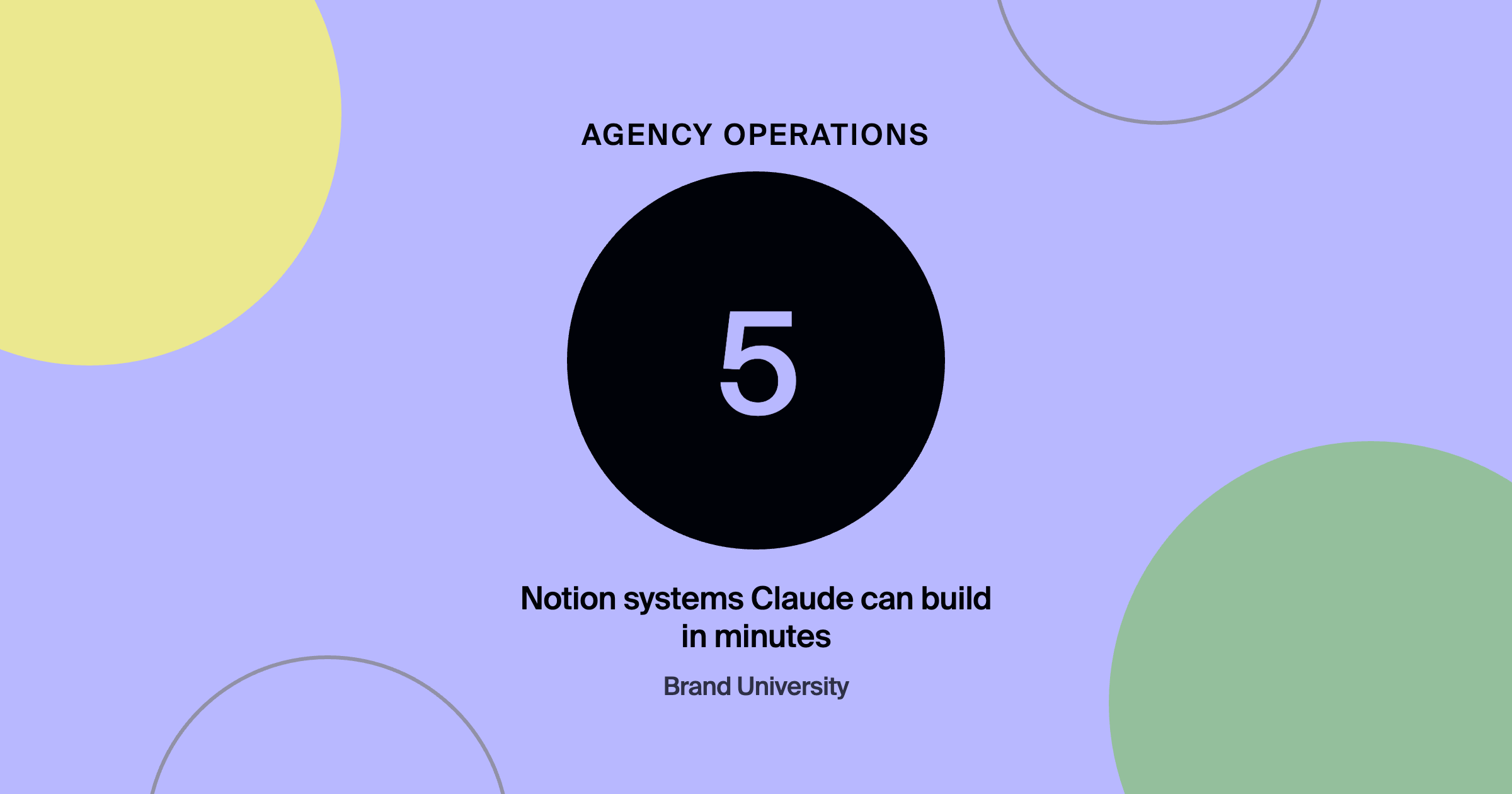
How to use Claude with Notion to build design agency systems fast: a client CRM, project hub, proposal library, content calendar, and SOPs, with ready-to-use prompts.
Apr 13
Evan Barnes
Webflow vs. Framer: Which One Actually Grows With Your Design Business?
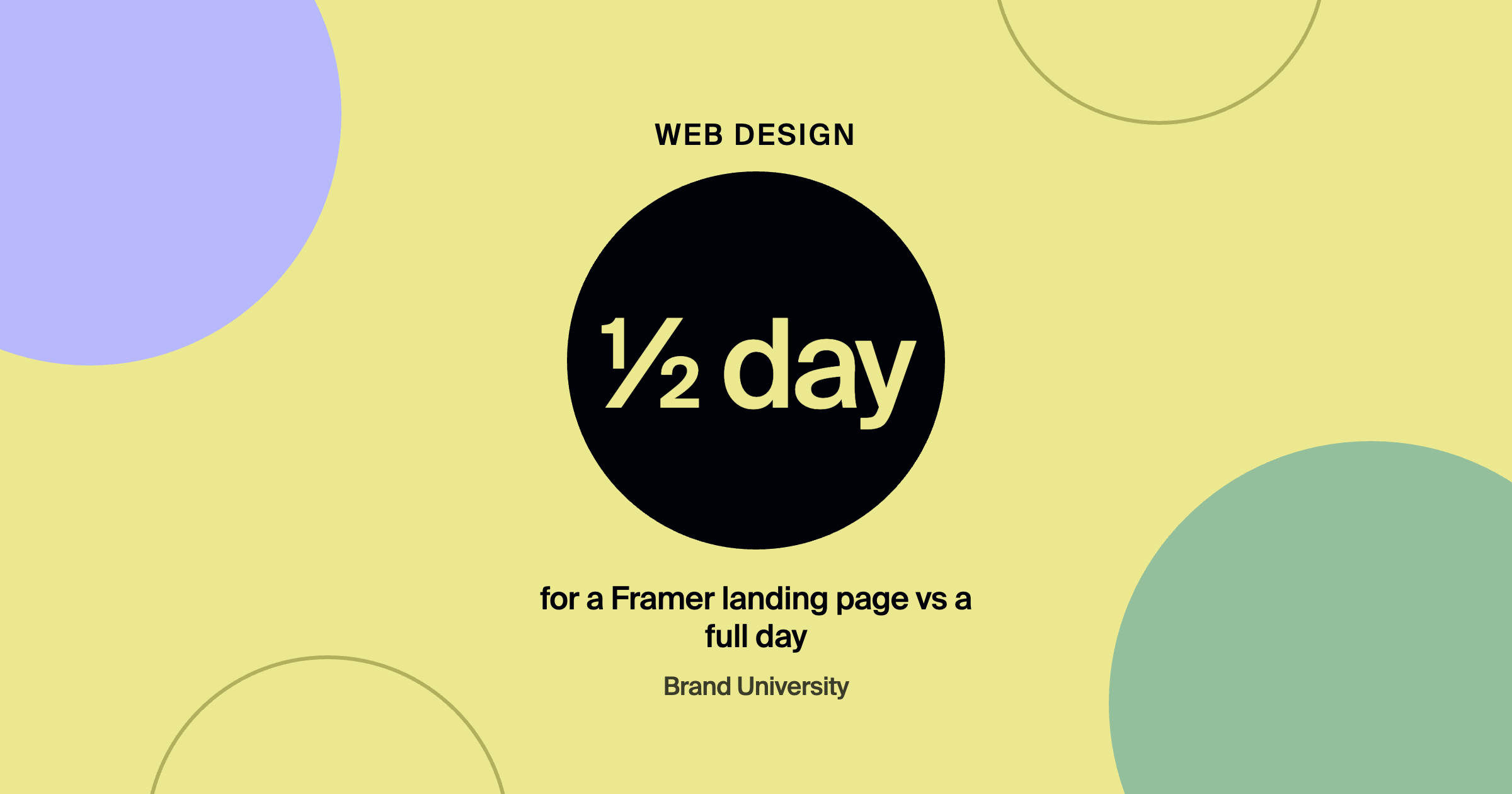
Webflow vs Framer for design agencies in 2026: Framer for speed and visual impact, Webflow for CMS, SEO, scale, and long-term client relationships. How to choose.
Apr 13
Evan Barnes
How Designers Are Landing Clients in 2026 (Cold Email, Creator Boards + the Positioning Play Nobody's Talking About)
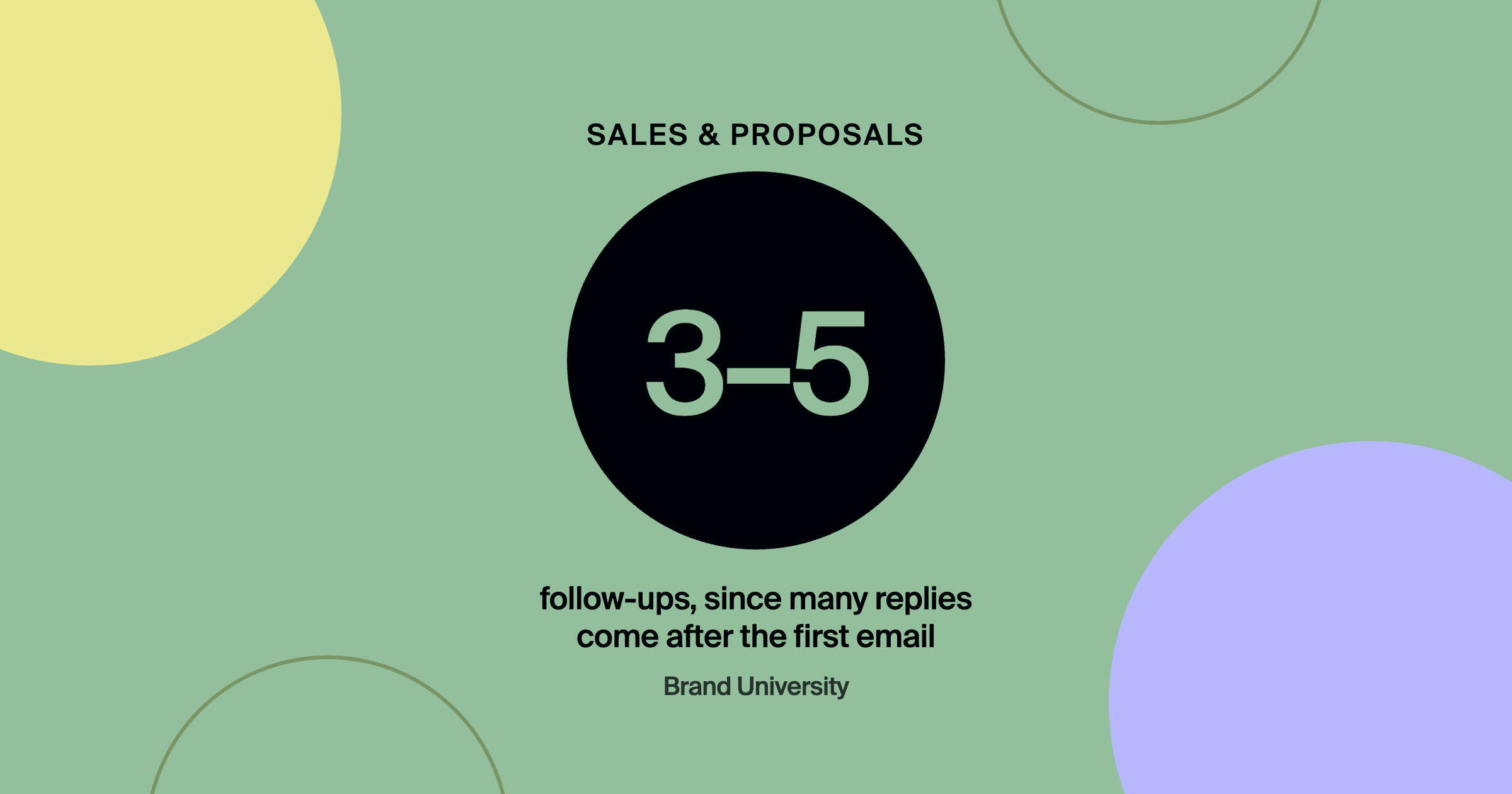
How designers land clients in 2026: lock in specific positioning, send researched cold emails, use the BU Creator Board for warm referrals, and show up where your clients are.
Apr 13
Evan Barnes
How to Build a Case Study That Actually Closes Clients (No, Your Dribbble Shots Don't Count)
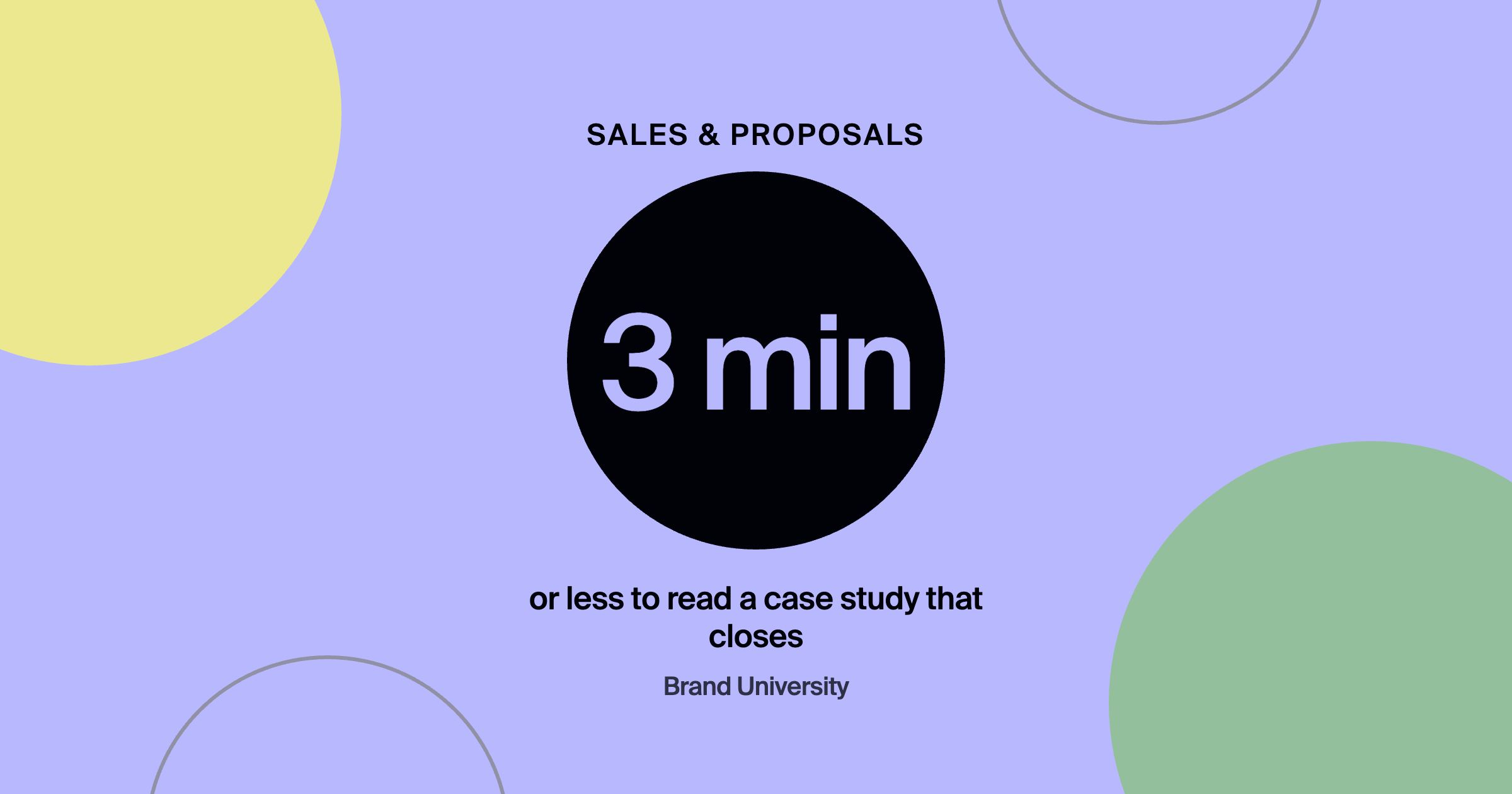
How to build a design case study that closes clients: a business-first problem, your strategic thinking, measurable results, and 3 to 5 elite mockups, readable in 3 minutes.
Apr 13
Evan Barnes
Specialist vs. Generalist: Why Niching Down Is the Cheat Code to a 6-Figure Design Agency
Specialist vs generalist design agency: why niching down raises prices and referrals, the honest tradeoffs, and three questions to pick your niche without overthinking it.
Apr 13
Evan Barnes