How to Handle a Client Who Wants to Skip the Process


The short answer: find out why they want to skip it, which is usually urgency, budget, or past bad experiences. Explain in business terms what the process protects them from, offer a compressed version instead of dropping it entirely, and be willing to walk away if they insist on jumping straight to final designs.
Some clients want to go straight to logos or homepage designs and skip discovery and strategy. Giving in usually leads to endless revisions and a weaker result. Holding the line without losing the deal is a learnable skill.
Key takeaways
- Skipping the process is usually a symptom of urgency or skepticism.
- Explain the process by what it prevents: wasted rounds and weak results.
- Offer a shorter version, not no version.
- Put the process in the proposal before the first call ends.
- Some clients aren't a fit, and that's okay.
Why do clients want to skip the design process?
Usually one of three reasons: they're in a hurry, they're worried about cost, or a past designer's process felt like busywork. Ask directly: What's driving the timeline? or Have you worked with a designer before? The answer tells you which concern to address.
- Ask what's driving itUrgency, cost worries, or a past process that felt like busywork.
- Explain it in outcomesSkipping discovery usually means more revision rounds later.
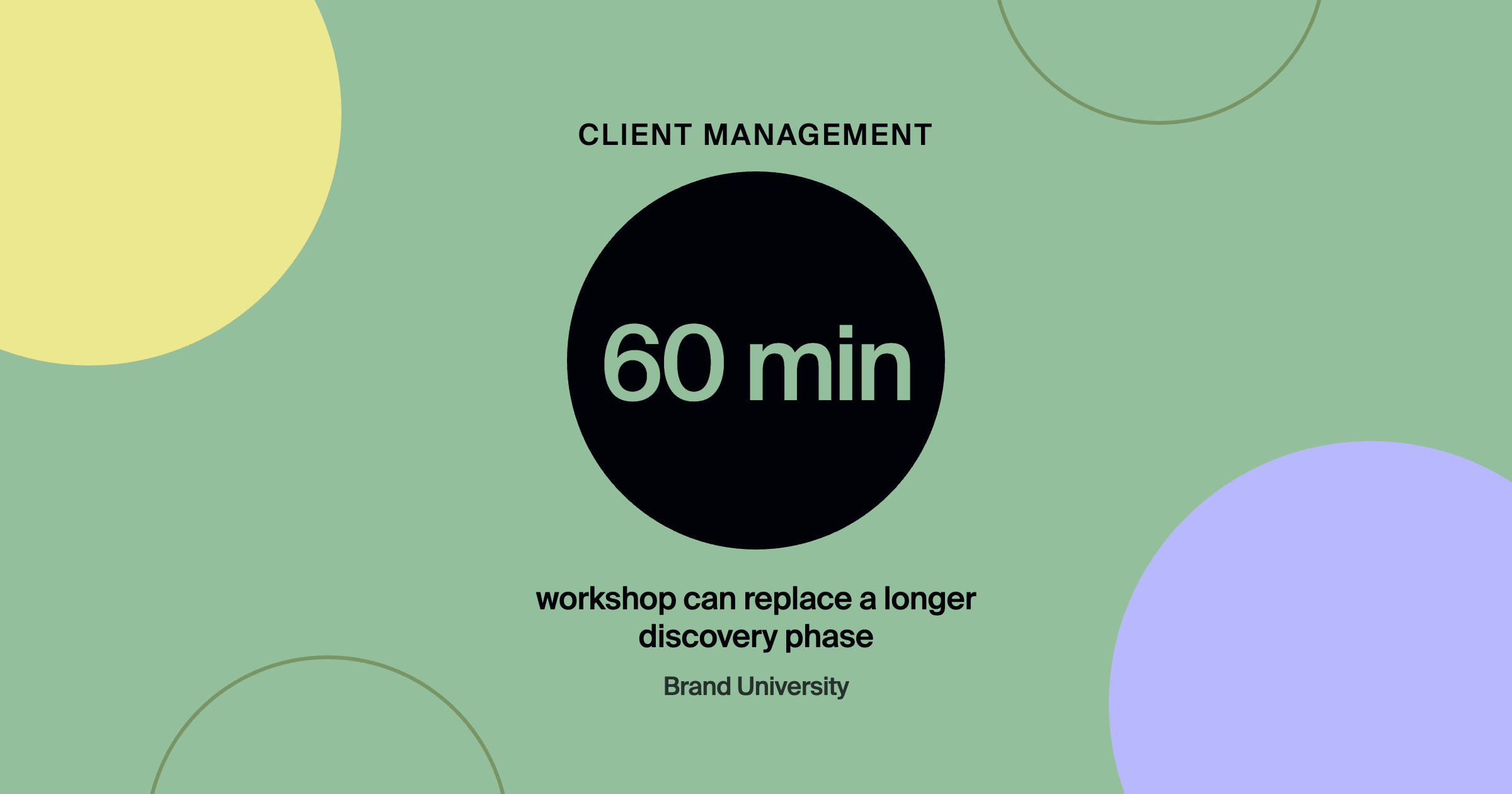
- Offer a compressed versionA focused 60-minute workshop and a one-page brief.
- Walk away if they insistFinal designs with no strategy will likely go sideways.
How do you explain why discovery matters?
In outcomes, not methodology. Discovery is how we make sure the design attracts the customers you want instead of just looking nice. Skipping it usually means more revision rounds later, which costs more time than we save. Clients care about results and timelines, so frame the process around both. Brand Strategy Before Brand Design gives more language for this.
Can you shorten the process instead of skipping it?
Yes, and it's often the best compromise. A focused 60-minute workshop and a one-page brief can replace a longer discovery phase for smaller projects. The key decisions still get made, just faster. For websites, branded by's landing page wireframes are a good way to show a client why a short structure step saves time later.
How do you prevent this conversation in the first place?
Present your process in the discovery call and the proposal as how you work, not an optional extra. Show the phases, what each produces, and the timeline. Clients who see the process upfront rarely push to skip it later.
When should you walk away?
If a client insists on final designs with no strategy and no room for a compressed version, the project will likely go sideways. Declining politely is often better for both of you. Five Red Flags a Client Will Be a Nightmare covers related warning signs.
Frequently asked questions
Should discovery be a paid phase?
Yes. Discovery produces real value and should be priced, either as its own phase or built into the project.
What if a client already has a brand strategy?
Review it together. If it's solid, you can move faster. If it's thin, a short workshop fills the gaps.
How long should a discovery phase take?
From a single workshop for small projects to one or two weeks for larger brand and website engagements.
Where to go from here
Client process scripts are covered inside Brand University. Pair this with Setting Client Expectations in the First Week, and join Brand University on Skool.
About the author
Evan Barnes is the founder of Brand University and of branded by, a brand-first growth agency based in Greenville, South Carolina. He built Brand University to teach designers the business side of design, from positioning and pricing to running client work, and more than 1,200 designers now learn inside the Brand University community on Skool.