Turning a Finished Project Into a Testimonial That Sells


The short answer: ask at handoff when the client is happiest, use specific questions about the problem, the experience, and the result instead of asking for a testimonial, offer to draft it from their answers for approval, and place the finished quote where prospects make decisions, like proposals and service pages.
Most testimonials are generic, great to work with, highly recommend, because most designers ask the wrong way. Here's how to get one that actually helps close future deals.
Key takeaways
- Timing matters: ask when satisfaction peaks.
- Specific questions produce specific quotes.
- Offering to draft removes the client's biggest obstacle.
- Get permission for name, company, and photo.
- Put testimonials where decisions happen.
When should you ask for a testimonial?
Right at handoff or right after the client shares a result, when enthusiasm is highest. Waiting months turns an easy favor into an awkward request.
What questions get a good testimonial?
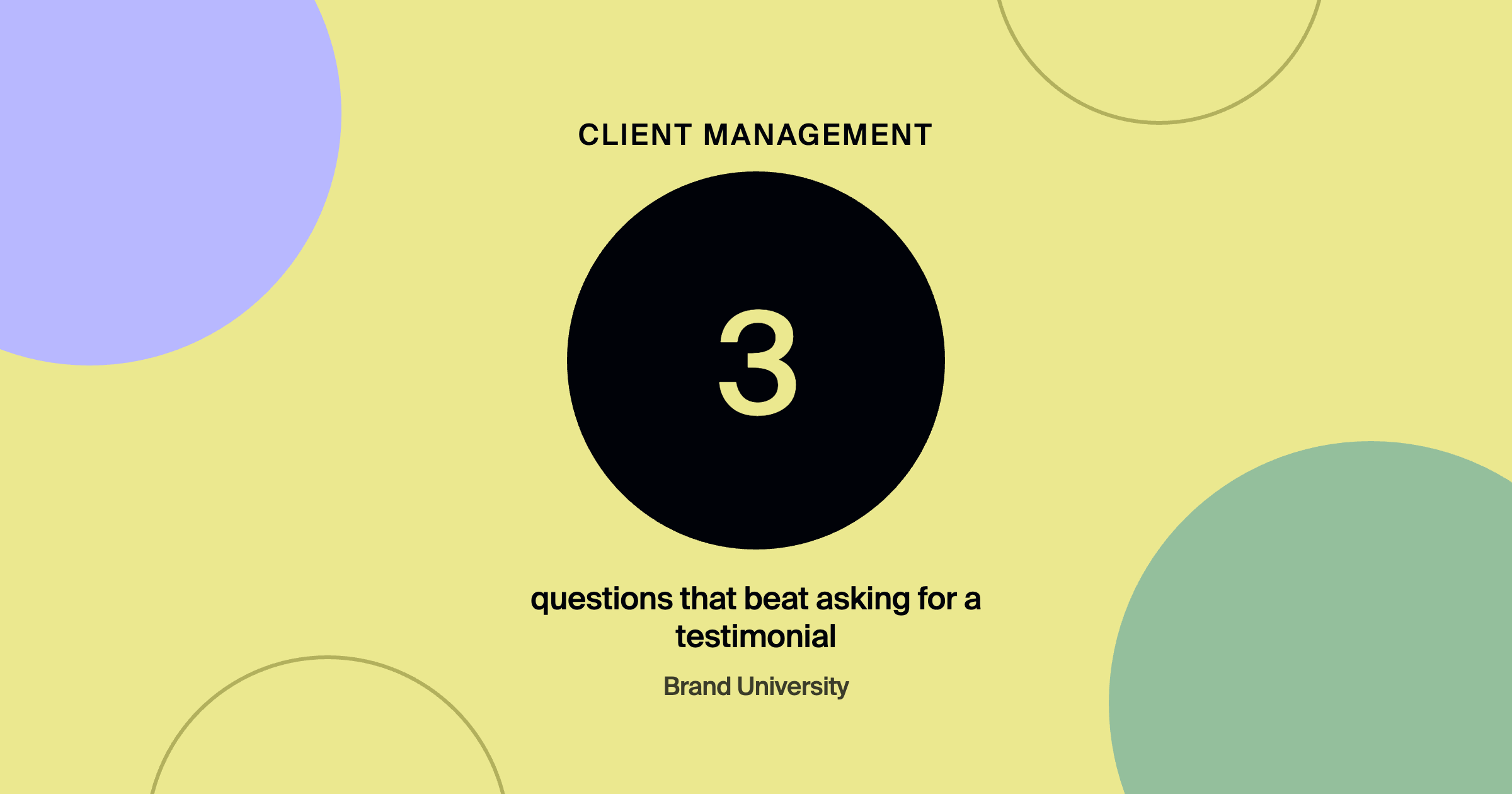
Three simple ones: What was going on before we started? What was it like working together? What's changed since? Those answers naturally form a before, experience, and after story, which is far more persuasive than a general compliment.
Three questions that write the testimonial
| Ask | What it gives you |
|---|---|
| What was going on before we started? | The before |
| What was it like working together? | The experience |
| What's changed since? | The after |
Far more persuasive than a general compliment.
Should you write the testimonial for the client?
Offer to. Many clients want to help but don't know what to say. Draft a short quote from their own answers and ask them to edit or approve it. Always use their real words and get explicit approval before publishing.
Where should testimonials appear?
Where prospects decide: proposals, service pages, near contact forms, and in case studies. Reviews on public platforms matter too, because they influence how both people and AI tools evaluate a business. branded by explains how in your brand is what AI says it is.
How do testimonials fit into case studies?
A specific client quote is often the strongest proof in a case study, especially when you don't have hard numbers. Writing a Case Study That Sells the Next Project shows where to place it.
Frequently asked questions
Should testimonials include the client's full name?
Full name, title, and company are the most credible. Use what the client approves.
Are video testimonials better?
They can be more persuasive, but a strong written quote is far easier to get and still very effective.
Should I ask for Google reviews too?
Yes. Public reviews build credibility with prospects and help local and AI search visibility.
Where to go from here
Testimonial scripts are covered inside Brand University. Pair this with Turning Client Wins Into a Marketing Engine, and join Brand University on Skool.
About the author
Evan Barnes is the founder of Brand University and of branded by, a brand-first growth agency based in Greenville, South Carolina. He built Brand University to teach designers the business side of design, from positioning and pricing to running client work, and more than 1,200 designers now learn inside the Brand University community on Skool.