Writing a Case Study That Sells the Next Project


The short answer: structure every case study as problem, process, and proof. Open with the client's business problem in plain terms, briefly show the key decisions you made and why, lead the results with numbers or a specific client quote, and then actually use the case study in proposals, outreach, and sales calls.
A good case study answers a prospect's biggest unspoken question before the first call: has this designer solved a problem like mine? Most case studies fail not because the project was weak, but because the write-up never makes that case.
Key takeaways
- Open with the business problem, not the visuals.
- Show three or four real decisions, not a full methodology.
- Put numbers first in the results section.
- End with the outcome, not a hard sales pitch.
- A case study only sells if you actually send it.
What structure should a design case study follow?
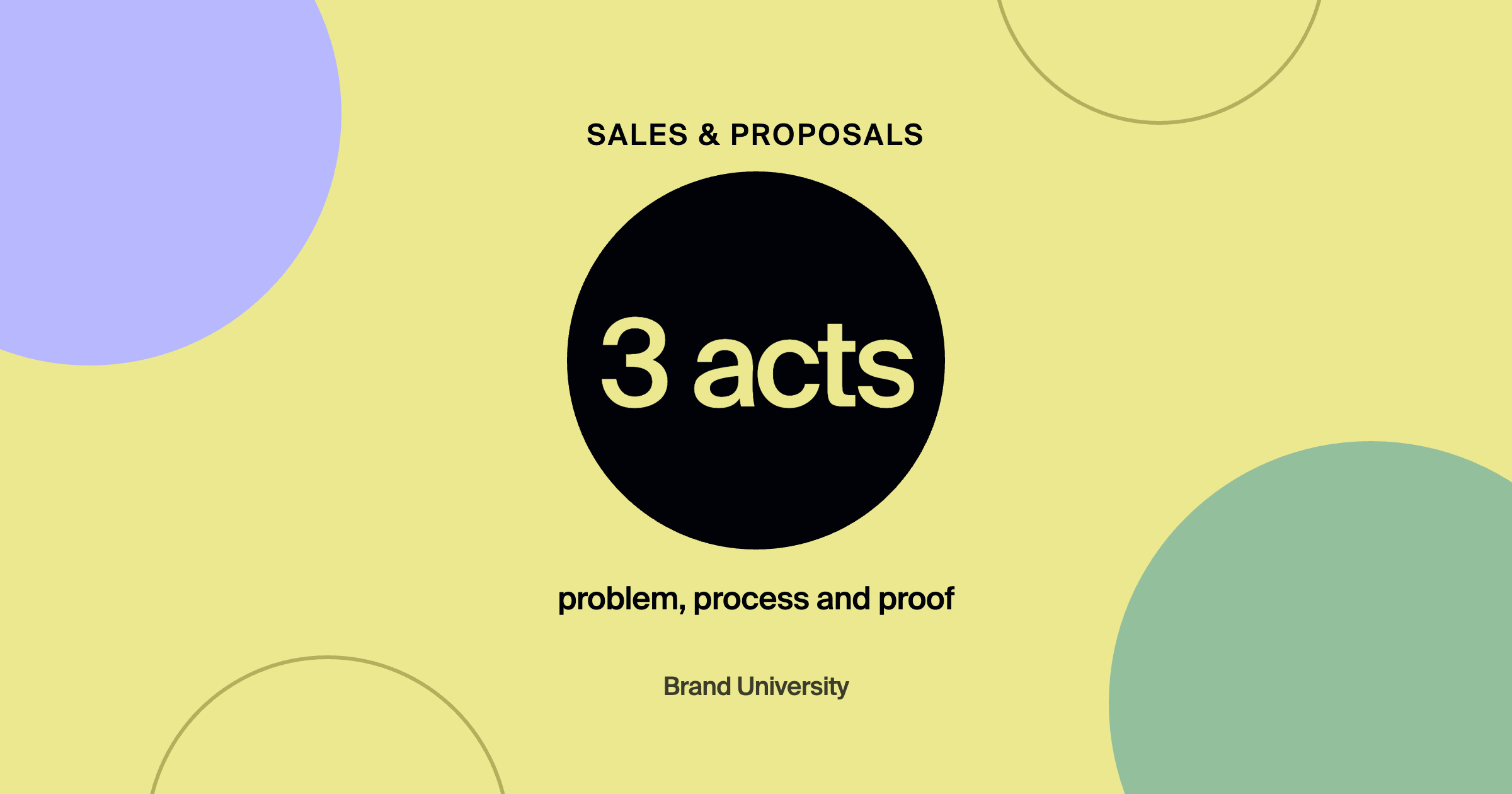
Three acts: problem, process, proof. The problem sets up the stakes. The process shows your judgment. The proof shows it worked. branded by breaks this down step by step, with a real example, in how to write a brand case study that wins clients in one day.
Three acts
| Act | What it shows |
|---|---|
| Problem | The client's business problem in plain terms, so prospects see themselves |
| Process | Three or four key decisions and why, proving your judgment |
| Proof | Numbers first, or a specific client quote about the impact |
How should a case study open?
With the business, not the design. A regional manufacturer losing quotes to newer, more polished competitors tells a prospect more in one line than a paragraph on the color palette. Prospects need to recognize their own situation before they care about your solution.
How much process should a case study include?
Enough to show thinking, not a textbook. Three or four sentences on discovery, the key strategic decision, and why you chose one direction over another. That proves you have a process, which is what higher-paying clients are really buying.
What if you don't have hard numbers?
Use the most specific evidence you can: a detailed client quote about the business impact, faster sales cycles, more qualified inquiries, or a before-and-after that speaks for itself. Numbers are best when you have them. A single metric can anchor a whole story, like branded by's case study built around 6,939 tracked calls. Turning a Finished Project Into a Testimonial That Sells covers how to get quotes that work this hard.
How should a case study end?
With the outcome. Let the reader draw the conclusion that this could work for them. A short, soft line about the kind of work you do is fine. A hard sales pitch at the bottom usually weakens the story.
Where should you use case studies?
Everywhere a prospect needs proof: linked in proposals, attached to follow-ups, referenced on discovery calls, shared in cold outreach, and featured on relevant service pages. Write it once, then use it constantly.
Once the case study brings in the next project, you will need a quote ready. The free design pricing calculator gives you a price to quote for any project type based on your experience, the client, and what you need to earn this year. No email required.
Frequently asked questions
How long should a design case study be?
Usually 400 to 900 words plus visuals. Long enough to show the problem, process, and proof, short enough to read in a few minutes.
Should case studies include pricing?
Generally no. Focus on the problem and outcome. Pricing conversations belong in the proposal.
How many visuals should a case study have?
Three to five strong ones, including at least one before-and-after or in-context mockup.
Where to go from here
Full case study templates are covered inside Brand University. Pair this with What Your Portfolio Should Prove, Not Just Show and How to Build a Case Study That Actually Closes Clients, then join Brand University on Skool for feedback on yours.
About the author
Warren Coppage is an owner and the Director of Growth at branded by, a brand-first growth agency based in Greenville, South Carolina. He leads advertising and growth for branded by's clients and has managed more than $10 million in ad spend across home service, eCommerce, and other industries. He writes for Brand University about the marketing, web, and sales side of running a design business. Connect with him on LinkedIn or learn alongside him in the Brand University community on Skool.