The High Ticket Closer's Guide to Discovery Calls
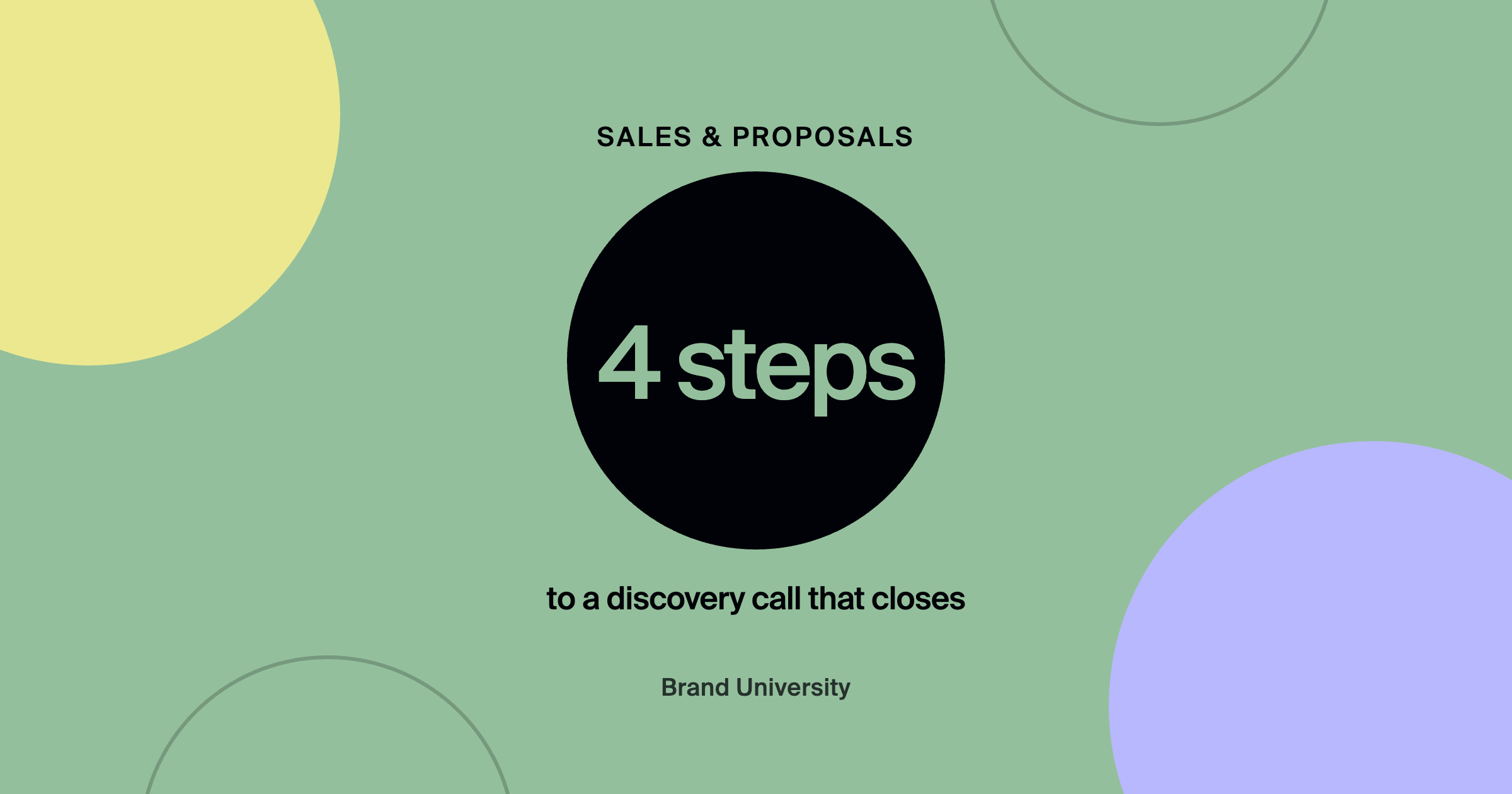


The short answer: a discovery call that closes high-ticket clients follows four steps in order: ask about their business and why they're looking now, dig past the first problem they name, let them describe what it costs to do nothing, and only then explain how you'd work together and state the price. Then stop talking.
Most designers lose the high-ticket client on the discovery call, not on price. They talk too much about themselves, answer questions nobody asked yet, and land the price conversation with no foundation under it. Then they wonder why the prospect went quiet.
A discovery call that closes isn't a sales pitch. It's a structured conversation with a specific job: find out if there's a real problem worth solving, find out if you're the one to solve it, and let the prospect say that out loud before you ever mention price.
Key takeaways
- The first five minutes are about their business, not your portfolio.
- Why now? reveals the real problem and the urgency.
- The first problem stated is rarely the whole problem.
- Prospects who name the cost of inaction sell themselves.
- After stating your price, stay silent.
What are the four parts of a discovery call?
Open with their world, not yours. The first five minutes are not about your process, your background, or your portfolio. Ask what's going on in the business right now. Ask why they started looking for help this month specifically, not six months ago. That last question matters more than it sounds. Whatever triggered the search is usually the real problem, and it's rarely the one in their original inquiry form.
Dig past the first answer. The first problem a prospect states is almost never the whole problem. We need a new website is the surface. Underneath it might be we're embarrassed to send people to our current site or we're losing quotes to a competitor with a better first impression. Ask what happens if this doesn't get fixed. Ask what they've already tried. The gap between the surface answer and the real answer is where high-ticket deals live, because the real answer is usually worth more to fix than the surface one.
Let them describe the cost of doing nothing, in their own words. Don't tell a prospect what it's costing them to stay stuck. Ask them. If this is still a problem in six months, what does that cost you? People will build the business case for their own purchase if you give them the question. And once they've said it out loud, they've sold themselves more effectively than you ever could. If you want the underlying math, branded by's profitability equation breakdown shows how to translate cost of doing nothing into a number a client can't argue with.
Only then, talk about what working together looks like. By the time you get here, you already know the real problem, what it's costing them, and how they'd describe success. Now you can describe your process in terms of their specific problem, not a generic pitch. This is also where the price lands, and it lands easier, because it's now attached to a cost they already named out loud.
- Open with their worldAsk what's going on in the business and why they're looking now.
- Dig past the first answerThe first problem named is rarely the whole problem.
- Let them name the cost of doing nothingIn their own words, not yours.
- Only then, describe working togetherTie your process to the problem they described, state the price, then stop talking.
Which discovery call questions close high-ticket clients?
What made now the right time to look for this? tells you the urgency, which tells you how much room there is on price and timeline. Proof matters here too. How to write a brand case study that actually closes deals covers having that proof ready before the call, not scrambled together after.
What's your experience been working with a designer or agency before? surfaces old wounds before they become objections mid-project. A bad past experience explains almost every we'll think about it that follows.
What does success look like to you six months after this launches? gets you a measurable outcome you can design toward and reference back to when the project is done.
Who else is involved in this decision? This one gets skipped constantly and kills more deals than price ever does. If you're pitching to someone who has to convince a partner or a boss afterward, you haven't pitched the real decision maker. Get everyone on the call, or get very clear on what the actual decision maker needs to hear secondhand.
What should you do after stating your price?
Stop talking. This is the hardest discipline in the whole call. The instinct to fill silence with a justification, a discount, or a but we can also do a smaller version undoes everything the first three parts built. Say the number. Let it sit. The next person to talk should be them.
Before the discovery call, know the range you are going to quote. The free design pricing calculator gives you a price to quote for any project type based on your experience, the client, and what you need to earn this year. No email required.
Frequently asked questions
How long should a design discovery call be?
Usually 30 to 45 minutes. Long enough to uncover the real problem, short enough to respect a busy owner's time.
Should you share your price on the first call?
Share a range or your starting price once you understand the problem and cost of inaction. It qualifies the lead and avoids surprises in the proposal.
What's a good discovery call close rate for designers?
It varies by lead source, but if you're closing under about 30 percent, the call structure is usually the first thing to fix.
Where to go from here
This exact call structure, with the full script, objection responses, and proposal templates that follow it, is taught inside the High Ticket Closer track in Brand University. See Why Most Designers Are Undercharging for the pricing side, and The One-Page Proposal That Closes Faster Than a Deck for what to send next. Join Brand University free on Skool and start there.
About the author
Evan Barnes is the founder of Brand University and of branded by, a brand-first growth agency based in Greenville, South Carolina. He built Brand University to teach designers the business side of design, from positioning and pricing to running client work, and more than 1,200 designers now learn inside the Brand University community on Skool.