Systemizing Delivery So Quality Doesn't Depend on You


The short answer: write down specifically what makes your work good, add review checkpoints after discovery, first draft, and before delivery, create a QA checklist anyone on the team can run, and standardize how you communicate with clients. That lets quality scale past your personal bandwidth.
If quality depends on you personally touching every project, growth hits a ceiling fast. Systems are what let quality hold up without you in every detail.
Key takeaways
- Vague standards can't be systemized. Specific ones can.
- Mid-project checkpoints catch problems while they're cheap.
- A QA checklist is often the highest-leverage system.
- Consistent client touchpoints feel like quality to clients.
- Systems need updating as the team grows.
How do you define quality for a design team?
Turn good design into checkable criteria: brand consistency across pages, responsive behavior on real devices, copy proofread, alt text written, forms tested, files named and organized. If a standard can't be checked, it can't be delegated.
Where should quality checkpoints go?
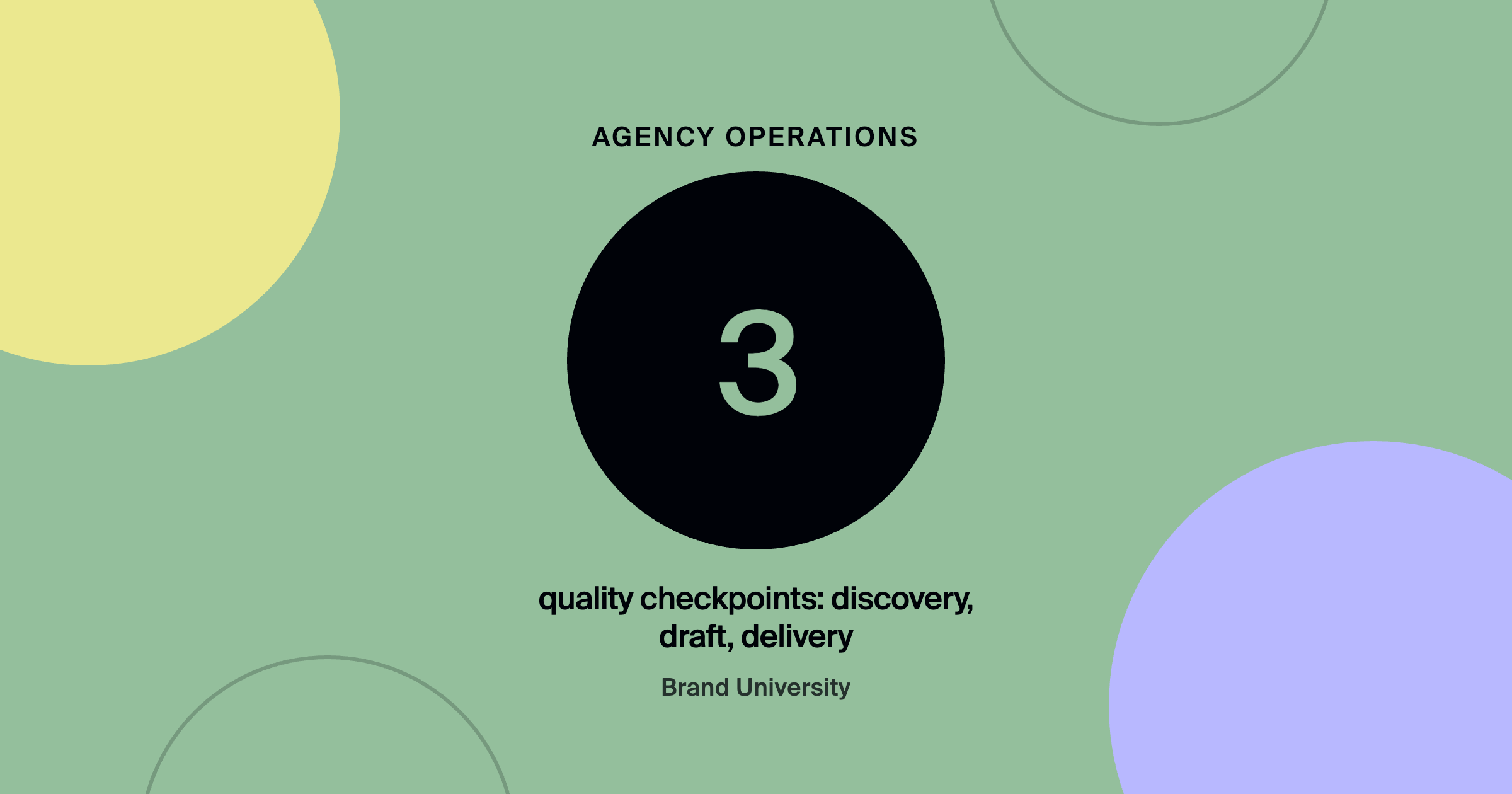
After discovery, after the first draft or concept, and before final delivery. Catching an issue at the concept stage costs minutes. Catching it after launch costs days and goodwill.
- After discoveryConfirm the brief before anything is designed.
- After the first draft or conceptCatching an issue here costs minutes.
- Before final deliveryCatching it after launch costs days and goodwill.
What goes on a design QA checklist?
For websites: responsive layouts, link and form tests, page speed, accessibility basics, SEO metadata, and analytics tracking. For brand work: file formats, color values, usage examples, and guideline completeness. branded by's 50-point website redesign checklist is a strong starting template for web projects.
Websites
- Responsive layouts
- Link and form tests
- Page speed and accessibility basics
- SEO metadata and analytics tracking
Brand work
- File formats
- Color values
- Usage examples
- Guideline completeness
Why standardize client communication?
Because clients notice consistency. Regular check-in cadences, the same presentation format, and predictable status updates make the experience feel reliable even as more people are involved. That reliability is often what clients value most.
How do delivery systems change as you grow?
A system built for two people won't necessarily fit six. Review checkpoints and checklists every few months and after any project that went sideways, so they stay useful rather than becoming bureaucracy.
Frequently asked questions
What's the first delivery system a small agency should build?
A pre-delivery QA checklist. It's quick to create and immediately reduces mistakes reaching clients.
How do I keep quality high with contractors?
Give them your written standards and checklist, review at checkpoints, and give specific feedback early.
Do systems make design work less creative?
No. They handle the repeatable parts so creative energy goes into the parts that need judgment.
Where to go from here
Delivery systems are covered inside Brand University and the Designers Booklet of Operations. Pair this with Standard Operating Procedures: Where to Start, and join Brand University on Skool.
About the author
Evan Barnes is the founder of Brand University and of branded by, a brand-first growth agency based in Greenville, South Carolina. He built Brand University to teach designers the business side of design, from positioning and pricing to running client work, and more than 1,200 designers now learn inside the Brand University community on Skool.