Standard Operating Procedures: Where to Start


The short answer: start with the processes that break when you're unavailable, usually client onboarding, revision rounds, and project close-out. Write down the steps as you actually do them, keep the first version to a short numbered list, and update it whenever the process changes.
Standard operating procedures sound like corporate overhead. For a small agency, they're practical: a way to make sure work gets done the same good way whether you personally touch every step or not.
Key takeaways
- Start with whatever slips when you're sick or on vacation.
- Document the real process, not an idealized one.
- A short numbered list beats an exhaustive manual.
- Client-facing, repeated processes come first.
- SOPs are living documents.
Which SOPs should a design agency write first?
Think back to the last time you were sick, traveling, or underwater, and what slipped. Those are your first SOPs. For most design studios that's client onboarding, handling revision rounds, delivering final files, sending invoices, and closing out a project.
How detailed should an SOP be?
Start simple: a numbered list of the core steps, where files live, and what done looks like. Cover the common case first and add edge cases as they come up. A short SOP that gets used beats a long one that doesn't.
Should SOPs describe the ideal process?
No. Write what you actually do, including the judgment calls. An SOP describing a process nobody follows creates false confidence and quietly gets ignored.
What's the fastest way to write SOPs?
Record yourself doing the task once, talking through each step, then turn the transcript into a checklist. AI tools make this fast. Evan shares a version of this workflow inside Brand University: record, transcribe, summarize, and drop it into Notion. branded by describes similar AI-assisted workflows in how agencies are using Claude AI to work smarter. Claude + Notion for agency systems shows where to store them.
- Record the task onceTalk through each step as you actually do it.
- Transcribe and summarizeAI tools make this part fast.
- Turn it into a checklistA short numbered list: core steps, where files live, what done looks like.
- Store it in one homeNotion, Google Docs or your project tool, wherever the team already works.
How do you keep SOPs up to date?
Whenever a process changes, update the doc in the same week. Review your core SOPs every quarter. Assign an owner for each one so it doesn't drift out of sync with reality.
Frequently asked questions
Where should a small agency store SOPs?
Anywhere the team already works, like Notion, Google Docs, or your project management tool. One consistent home matters more than the tool.
How many SOPs does a small studio need?
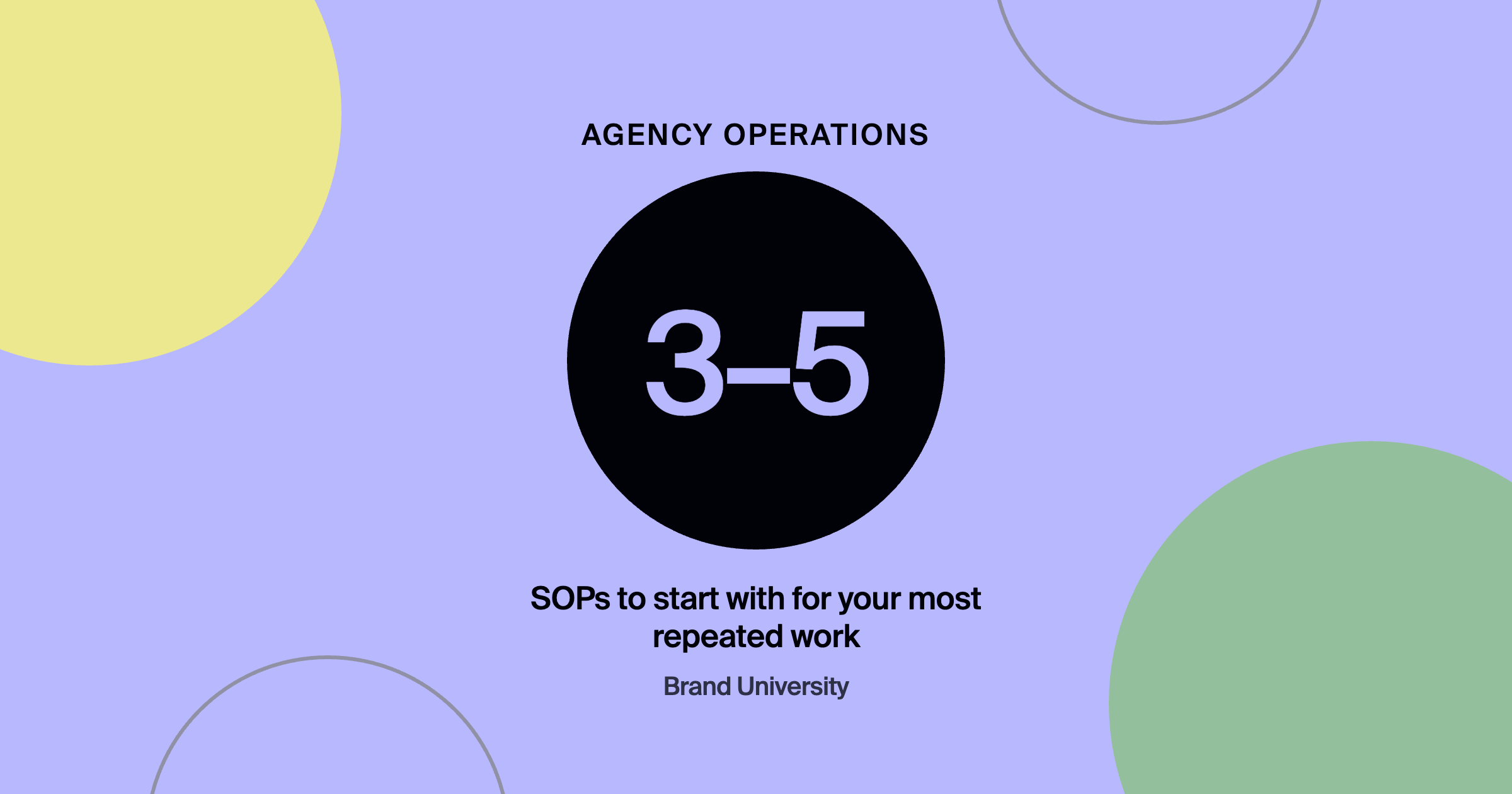
Start with three to five for your most repeated, client-facing processes. Add more as you delegate.
Do solo designers need SOPs?
Yes. They make your work more consistent now and make hiring or outsourcing far easier later.
Where to go from here
Process documentation is covered inside Brand University and the Designers Booklet of Operations. Pair this with Systemizing Delivery, and join Brand University on Skool.
About the author
Evan Barnes is the founder of Brand University and of branded by, a brand-first growth agency based in Greenville, South Carolina. He built Brand University to teach designers the business side of design, from positioning and pricing to running client work, and more than 1,200 designers now learn inside the Brand University community on Skool.