Staying Creative When Every Week Looks the Same

The short answer: protect a small amount of time for work with no client attached, add deliberate constraints to personal projects, seek out references outside your usual niche, and give yourself permission to make rough first drafts. Routine keeps a business healthy. These habits keep the creative side from flattening.
The routine that makes a design business sustainable, similar projects, familiar processes, predictable weeks, can slowly drain creative energy. Consistency and creativity can coexist, but it takes some deliberate effort.
Key takeaways
- Healthy process and creative autopilot feel similar until they don't.
- A couple of hours a month on personal work goes a long way.
- New constraints spark more ideas than open-ended freedom.
- Change what you look at, not just what you make.
- Rough first drafts unlock more than perfect first attempts.
How do you know you're on creative autopilot?
Projects start blurring together, you reach for the same solutions by default, and nothing feels new. Check in honestly every month or so instead of waiting for it to become burnout.
Why does unstructured creative time matter?
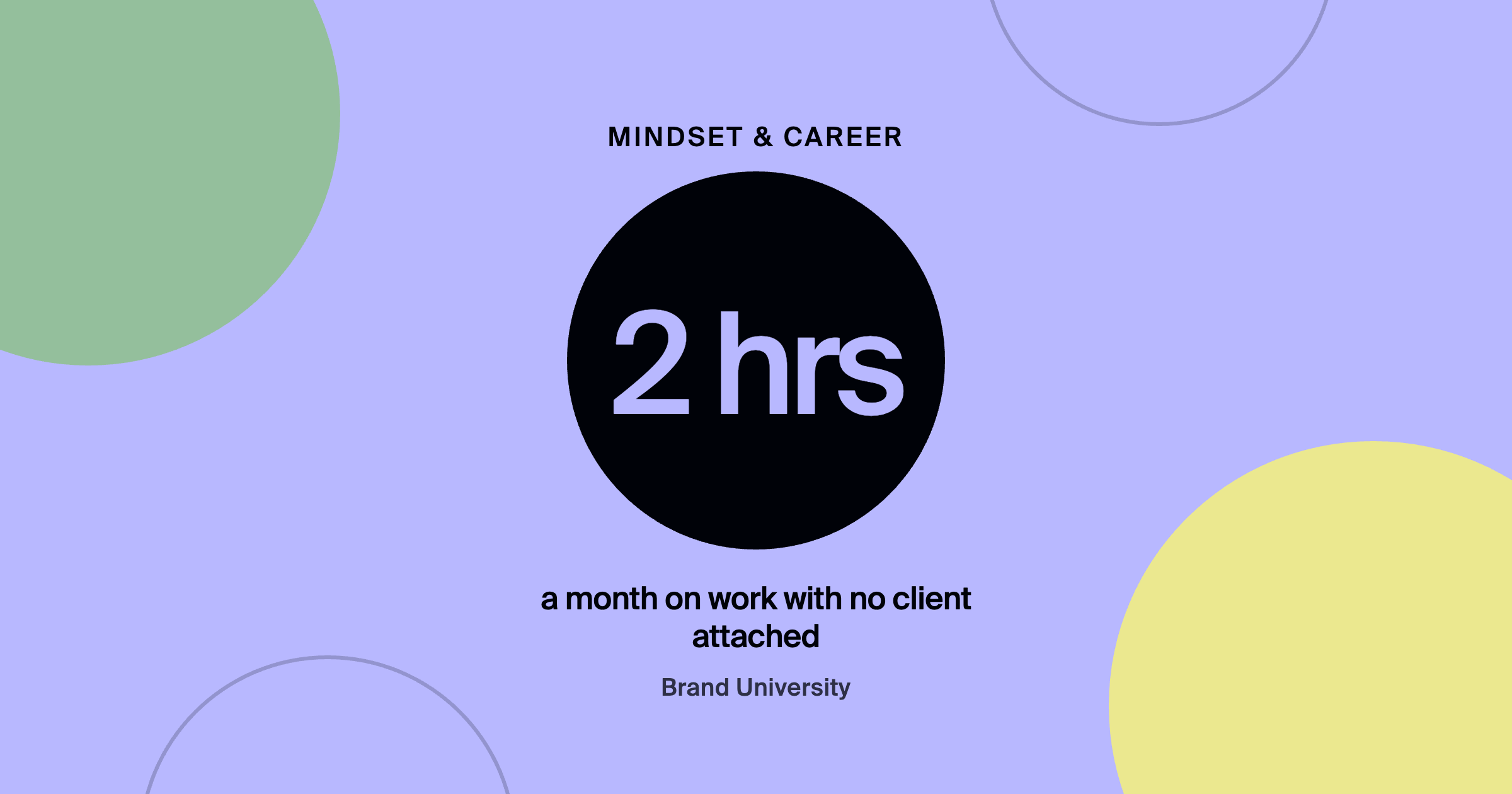
Work with no deliverable, like an experimental personal project, a new style, or a tool you don't normally use, keeps creative muscles active in ways client work often doesn't. Even two hours a month helps, and the experiments often feed back into client work later.
How do constraints help creativity?
A tight, specific constraint forces new problem-solving: design a mark using only type, finish a poster in one hour, work in a single color. Open-ended time often produces less than a clear limit does.
Open-ended time often produces less than a clear limit does.
Evan Barnes, Founder, Brand University
How do you find fresh design inspiration?
Change your inputs. If you follow the same accounts and galleries every week, your range narrows. Look outside design: architecture, packaging, film, signage, other industries. Human, imperfect work is getting more valuable too. branded by makes that case in why imperfect design feels more human in the AI era.
Why allow bad first drafts?
Pressure to get it right immediately kills momentum. A rough, fast first pass gets ideas moving, and refinement comes after. How to Design a Logo When You Have No Ideas uses exactly this approach.
Frequently asked questions
How do I avoid creative burnout as a freelance designer?
Protect time for personal work, vary your inputs, set real work hours, and take breaks between big projects when you can.
Should designers do personal projects?
Yes. They keep skills fresh, let you explore new styles, and often attract the kind of client work you want more of.
Can routine and creativity coexist?
Yes. Routine handles the business side so your creative energy goes into the work itself, as long as you deliberately protect some variety.
Where to go from here
Sustaining creative energy is covered inside Brand University. Pair this with Avoiding Burnout When You're the Whole Agency, and join Brand University on Skool to share personal projects with other designers.
About the author
Evan Barnes is the founder of Brand University and of branded by, a brand-first growth agency based in Greenville, South Carolina. He built Brand University to teach designers the business side of design, from positioning and pricing to running client work, and more than 1,200 designers now learn inside the Brand University community on Skool.