How Designers Are Landing Clients in 2026 (Cold Email, Creator Boards + the Positioning Play Nobody's Talking About)


The short answer: stop waiting to be found. Get specific about who you help and with what problem, send short researched cold emails with a single ask, follow up several times, use warm networks like the Brand University Creator Board for referrals, and show up on the platforms your specific clients actually use.
Key takeaways
- Passive posting is a hope strategy, not an acquisition strategy.
- Specific positioning makes every other tactic work.
- Great cold emails are short, researched, and ask for one small thing.
- Many replies come from follow-ups, not the first email.
- Different design disciplines should show up in different places.
Why aren't designers getting clients from their portfolios?
They post work on Behance, drop a reel on Instagram, update LinkedIn, and then wait. And wonder why nothing's coming in. That's not a client acquisition strategy. That's a hope strategy, and hope doesn't pay invoices.
Whether you're a brand, graphic, UI/UX, motion, product designer, or illustrator, here's what actually works for landing clients now.
Why does positioning come first?
Every acquisition strategy falls apart without it. Before you send a single cold email or post a single piece of content, answer one question clearly: who do you help, with what specific problem, through what specific type of design work?
I'm a graphic designer who does branding and UI and social media and pitch decks is a client repellent. It gives prospects no reason to choose you. Compare: I build brand identities for Series A SaaS companies that are ready to stop looking like a side project. Or: I design high-converting product pages for DTC e-commerce brands doing $1M to $10M in revenue. When positioning is that specific, the right clients self-select. branded by's complete guide to brand positioning applies to a design studio as much as to its clients. See also Specialist vs. Generalist.
How should designers write cold emails?
Cold email has a bad reputation because most people send generic, mass-blasted templates. Done right, it's one of the most direct and controllable ways to land clients.
A tool like Instantly handles the infrastructure: sending accounts, warmup, and deliverability, so you can focus on the message. But no platform can make a bad message good. The positioning and copy are still on you.
A high-converting designer cold email looks like this:
Subject: Your brand (quick thought)
Hey [First Name], came across [Company] while looking at [something specific you noticed, like a recent launch or funding announcement]. Your positioning in [space] is strong, but the brand isn't keeping up with it yet. I specialize in building brand systems for [their type of company]. Happy to share 2 or 3 quick ideas specific to what I noticed. No pitch, just useful. Worth a quick look?
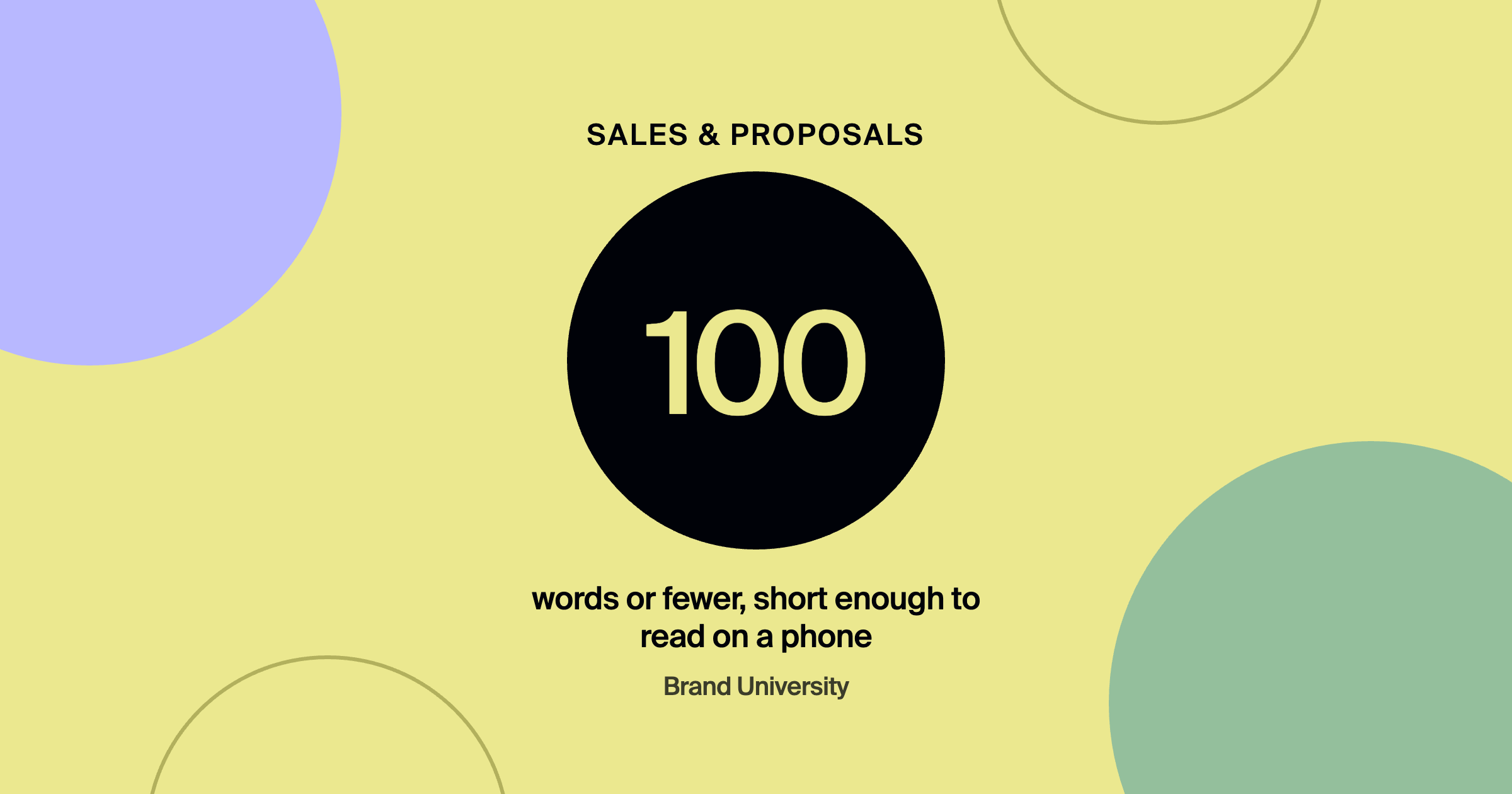
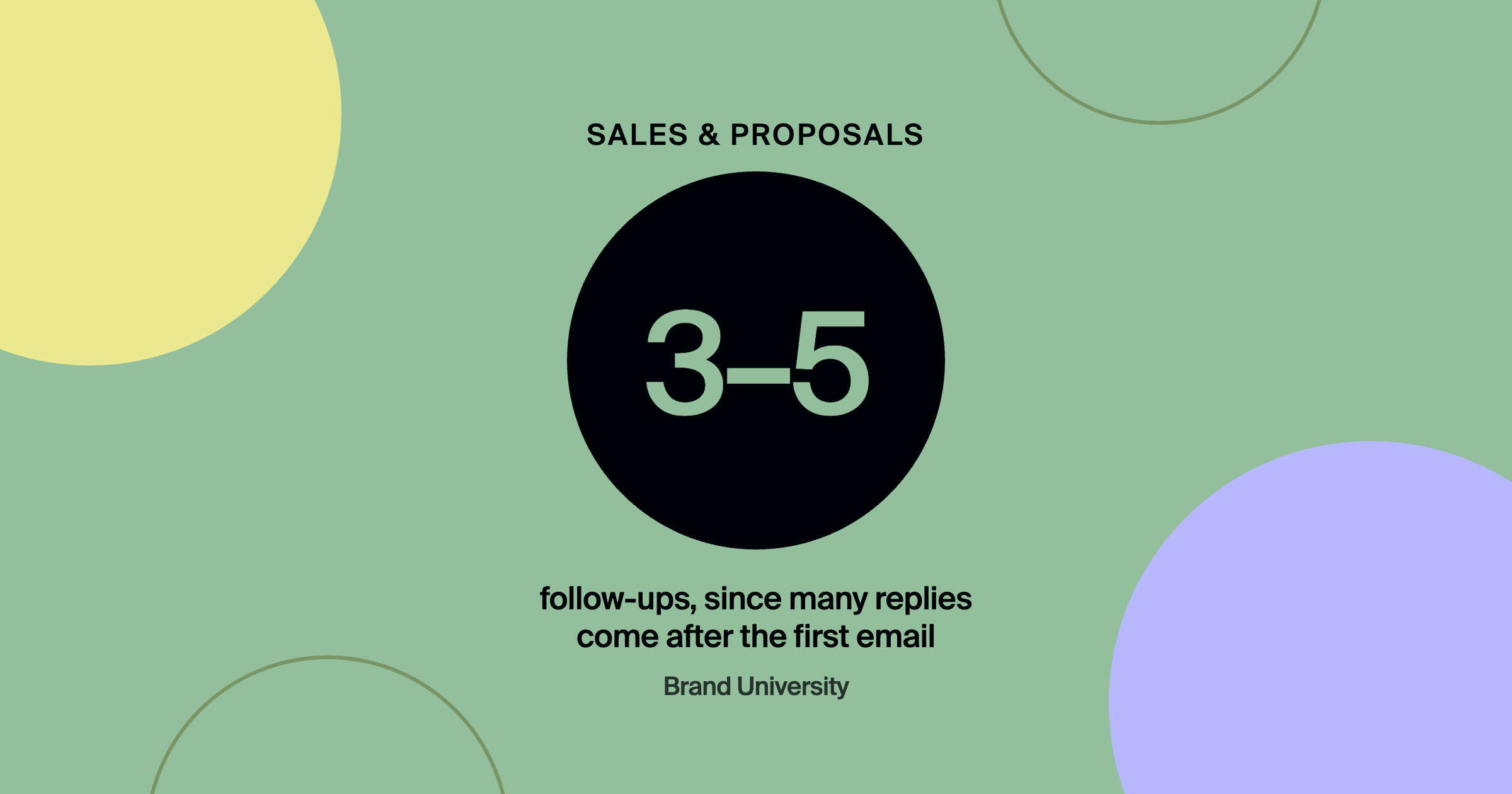
Under 80 words. Specific to them. One ask. No attachments and no portfolio link in the first email. Research every prospect, lead with a problem they have rather than a service you offer, and follow up 3 to 5 times, adding something new each time. A large share of replies come from follow-ups, not the first email. For opening lines, branded by's library of 40 proven hooks is a useful swipe file. Cold Outreach for Designers Who Hate Cold Outreach goes deeper.
What is the BU Creator Board?
One of the most underused resources in Brand University. It connects designers with real opportunities: client projects, collaborations, and referrals from designers who are booked out and need to pass work along.
The difference from a cold marketplace is trust. You're inside a network of designers who understand quality and are actively building. Show up consistently, be specific about what you do and who you serve, and build relationships with designers in adjacent niches. Referrals flow both ways when you're known for something specific.
Where should each type of designer look for clients?
- Brand designers: LinkedIn for B2B clients, Instagram for visibility, Dribbble for portfolio credibility, and cold email to startups and growing small businesses.
- UI/UX designers: LinkedIn for SaaS companies, Contra and Toptal for vetted freelance work, and cold email to Series A and B tech companies.
- Motion designers: Instagram and TikTok for organic reach, cold email to DTC brands and digital agencies, and LinkedIn for brand partnerships.
- Product designers: LinkedIn for in-house and agency roles, cold email to funded startups, and Layers.to for portfolio presence.
- Illustrators: Instagram and Behance for discovery, and direct outreach to editorial brands, publishers, and art directors.
- Graphic designers: LinkedIn for agency and corporate clients, cold email to marketing teams, and Instagram for consumer-facing brand work.
Discovery is spreading beyond search, too. branded by's search everywhere strategy explains why being visible across platforms and AI answers matters now.
Where to look for clients
| Designer | Where to show up |
|---|---|
| Brand | LinkedIn, Instagram, Dribbble, cold email to startups |
| UI/UX | LinkedIn, Contra and Toptal, cold email to Series A and B tech |
| Motion | Instagram and TikTok, cold email to DTC brands and agencies |
| Product | LinkedIn, cold email to funded startups, Layers.to |
| Illustration | Instagram, Behance, direct outreach to editorial and publishers |
| Graphic | LinkedIn, cold email to marketing teams, Instagram |
What mindset makes client acquisition work?
Designers who consistently land great clients don't wait to be discovered. They reach out directly, get specific about who they serve, and show up consistently enough that the right people know who to call. You're not begging for work. You're offering a solution to a specific problem that specific companies have. Framed that way, outreach stops feeling desperate and starts feeling like a service.
Client acquisition is a system, not a lottery. Position specifically. Reach out directly. Show up consistently. Do that, and the question stops being where do I find clients and becomes which ones do I want to take.
Finding clients is half the job. Pricing them is the other half. The free design pricing calculator gives you a price to quote for any project type based on your experience, the client, and what you need to earn this year. No email required.
Frequently asked questions
How many cold emails should a designer send?
Quality beats volume. Ten to twenty well-researched emails a week, with follow-ups, is a sustainable starting pace.
Should I include my portfolio in a cold email?
Usually not in the first email. Earn a reply with a specific observation first, then share relevant work.
Is posting on social media enough to get clients?
Rarely on its own. Pair content with direct outreach and referral relationships.
Where to go from here
Client acquisition systems and the Creator Board are inside Brand University. Pair this with Building a Personal Brand on LinkedIn as a Designer, and join Brand University on Skool.
About the author
Evan Barnes is the founder of Brand University and of branded by, a brand-first growth agency based in Greenville, South Carolina. He built Brand University to teach designers the business side of design, from positioning and pricing to running client work, and more than 1,200 designers now learn inside the Brand University community on Skool.