How to Run a Competitor Audit That's Actually Useful


The short answer: choose competitors based on who actually competes for the same customer, document what the whole category has in common, identify the gap that pattern leaves open, look beyond visuals to messaging and pricing, and finish with a one-page conclusion about what it means for the brand.
A competitor audit that's just screenshots labeled with company names looks thorough and produces nothing. A useful audit answers one question: where's the open space this brand could own?
Key takeaways
- Audience overlap beats industry labels when picking competitors.
- The shared pattern is the real finding.
- The pattern reveals whether to fit in or break away.
- Audit messaging, tone, and pricing, not just logos.
- End with a conclusion, not a slideshow.
Which competitors should you audit?
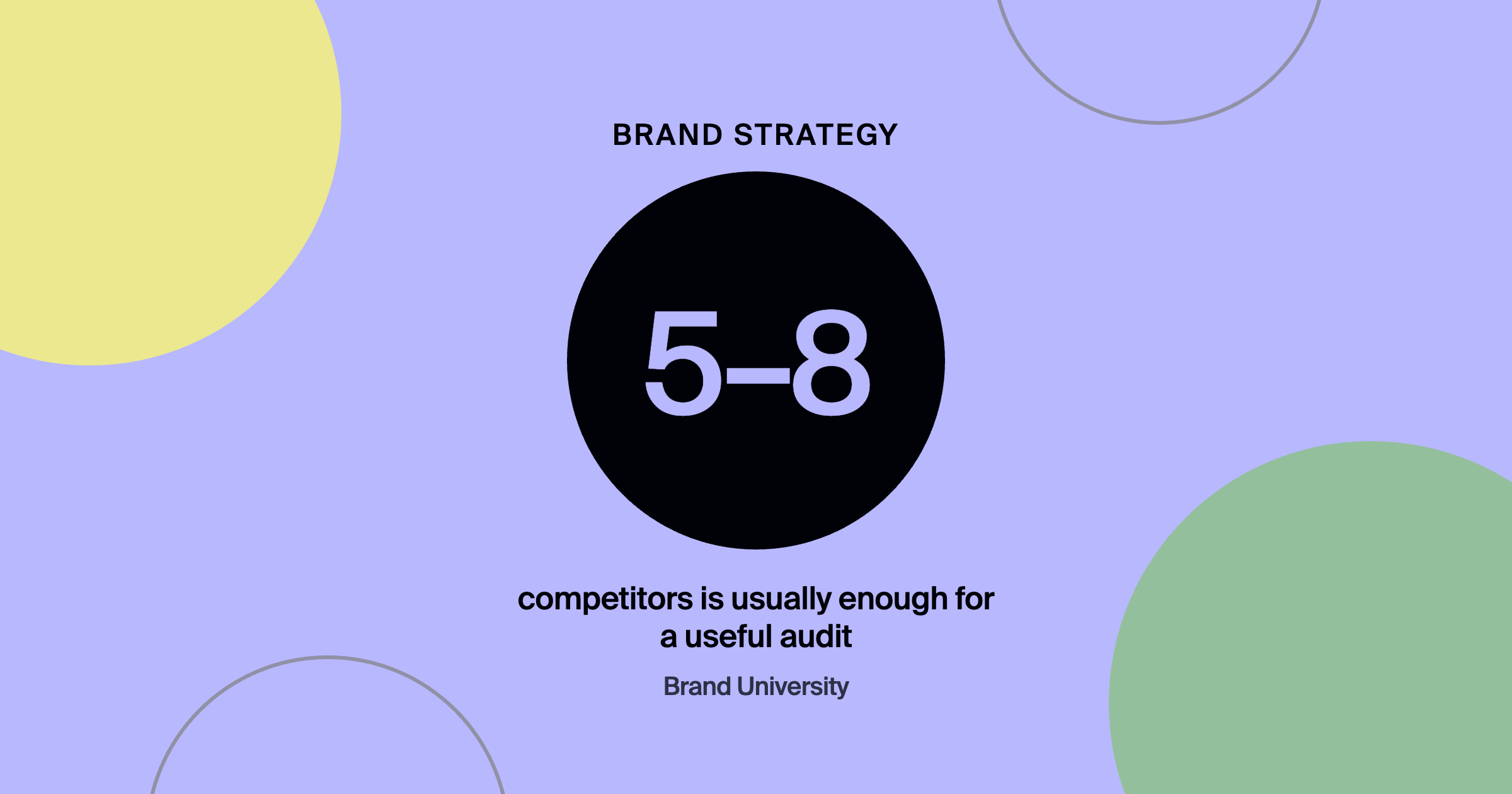
Businesses competing for the same customer's attention and budget, which sometimes includes adjacent categories. Ask the client who they've actually lost deals to, and who customers mention comparing them with. Five to eight is usually enough.
What should a competitor audit look for?
The pattern across the category: common colors, tone, imagery, claims, and structure. If every competitor uses blue, serious language, and stock handshake photos, that's the finding. Individual choices matter less than what everyone shares.
How do you use the gap the audit reveals?
Decide deliberately whether the brand should fit the convention, because customers expect and trust it, or break from it, because sameness has created an opening. Neither is automatically right. The audit's job is making the choice clear. Writing a Positioning Statement That Isn't Generic turns that choice into strategy.
Should a competitor audit go beyond visuals?
Yes. Audit messaging, pricing transparency, tone of voice, reviews, how they show up in search and AI answers, and even the sales process. A competitor with a weaker logo but a sharper message is still a real threat. branded by explains how AI tools compare brands in brand trust signals that make AI recommend you, which is worth adding to any modern audit.
- Pick by audience overlapAsk who the client has lost deals to; five to eight is usually enough.
- Find the shared patternCommon colors, tone, imagery, claims and structure across the category.
- Decide to fit or breakConvention earns trust; sameness can create an opening.
- Look past the visualsMessaging, pricing transparency, tone, reviews, search and AI answers.
What should the final deliverable look like?
One page: the category pattern, the gap, and what it means for this brand's strategy. A forty-slide deck with no stated conclusion did the research but skipped the analysis.
A competitor audit should end with a clear statement of where this brand stands. The free positioning statement builder turns what you do, who you do it for, and the result into a statement, a portfolio headline and a LinkedIn headline you can paste today.
Frequently asked questions
How long should a competitor audit take?
For most small business brand projects, a focused audit takes a day or two of research and analysis.
Should the client see the full audit?
Show the one-page conclusion with a few supporting examples. Keep the raw research as a backup.
Can AI tools help with competitor research?
Yes, for gathering messaging and reviews quickly. The pattern-finding and strategic conclusion still need your judgment.
Where to go from here
Competitor audit templates are covered inside Brand University. Pair this with Brand Strategy Before Brand Design, and join Brand University on Skool.
About the author
Evan Barnes is the founder of Brand University and of branded by, a brand-first growth agency based in Greenville, South Carolina. He built Brand University to teach designers the business side of design, from positioning and pricing to running client work, and more than 1,200 designers now learn inside the Brand University community on Skool.