Mood Boards That Lead Somewhere, Not Everywhere
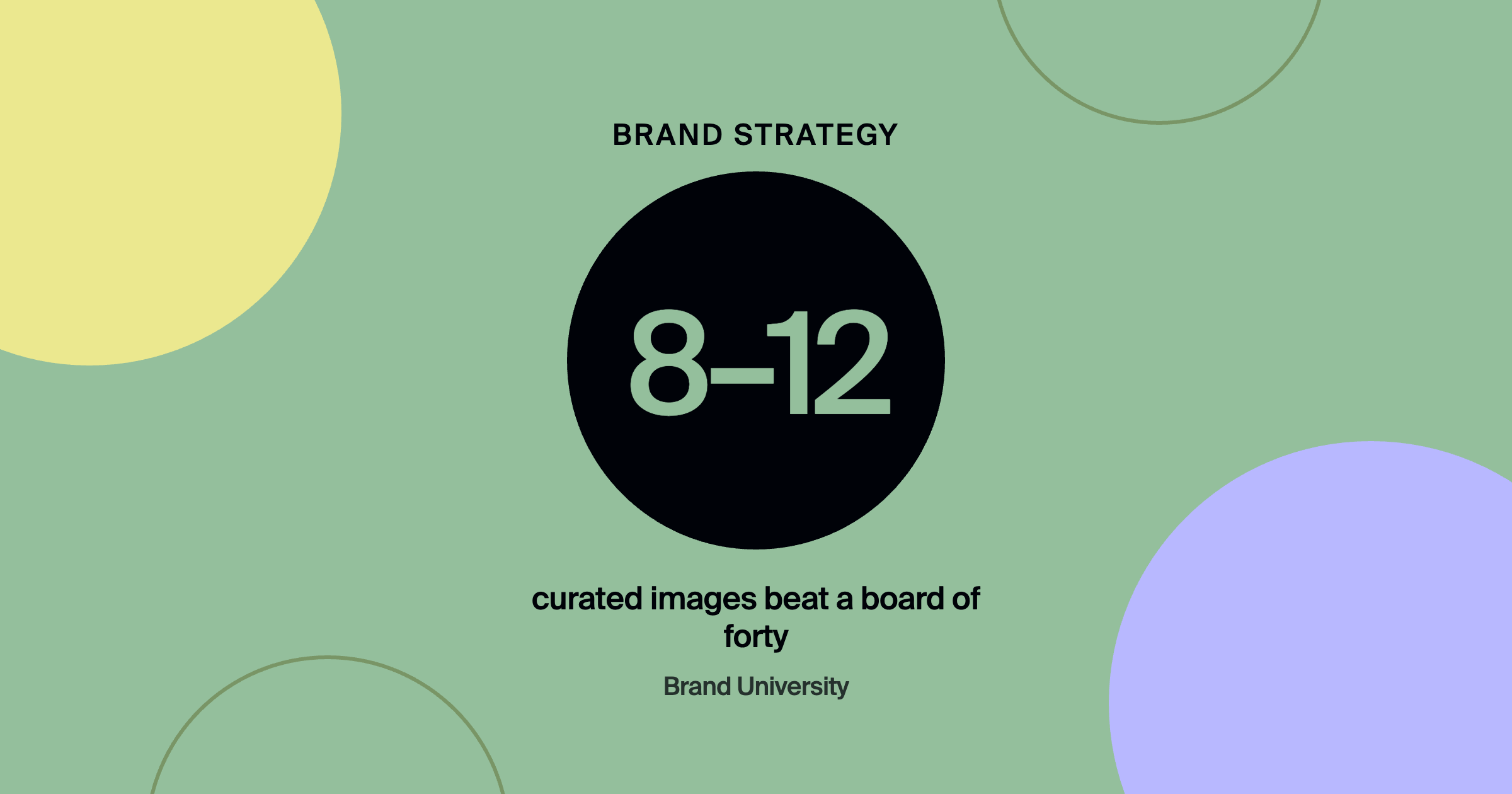


The short answer: build the mood board after strategy, not before. Curate 8 to 12 images that all point in one direction, add a few words that name the feeling, caption each image with what it's referencing, and present it as a recommendation rather than a menu of options.
A board with forty pins of everything vaguely attractive produces a brand with no clear direction, because the board never had one. A mood board is an argument for a specific point of view.
Key takeaways
- Strategy narrows the search before any image gets pulled.
- Fewer, sharper images communicate more.
- Words close gaps that images leave open.
- Captions prevent clients from reacting to the wrong detail.
- Present a direction, not a buffet.
When should you make a brand mood board?
After the strategy phase. Positioning, audience, and personality should define the direction before a single image is pulled, so every reference answers to a point of view rather than to what looks nice. Brand Strategy Before Brand Design covers that phase.
How many images should a mood board have?
Eight to twelve tightly curated images usually beat thirty. A scattered board forces the client to do the synthesis, guessing which images matter most. That's the designer's job.
Should a mood board include words?
Yes. A few adjectives, contrast pairs like confident but not loud, or a reference to a brand outside the category can clarify the feeling instantly. Words also connect the board back to the brand voice. branded by's brand voice and tone guide is a good reference for the verbal side.
Why caption mood board images?
So the client reacts to the right thing. A short note, like texture reference or for the color temperature, stops a client from loving or rejecting an image for a detail you didn't intend.
Leads everywhere
- Built before strategy
- Forty pins of everything attractive
- Images with no words
- No captions
Leads somewhere
- Built after strategy
- 8 to 12 tightly curated images
- A few words that name the feeling
- A caption on each image
How should you present a mood board?
As a recommendation: here's the direction we recommend and why. Tie it back to the strategy. Asking which do you like turns the board into a preference debate and restarts the process.
A mood board only leads somewhere if the positioning is settled first. The free positioning statement builder turns what you do, who you do it for, and the result into a statement, a portfolio headline and a LinkedIn headline you can paste today.
Frequently asked questions
Should I show clients multiple mood boards?
Usually one strong direction is better. If you show two, make them clearly distinct strategic options, not variations on taste.
What tools work for mood boards?
Figma, Milanote, and Pinterest all work. The curation matters far more than the tool.
Can I use AI images in a mood board?
They can help explore a feeling, but label them clearly and avoid implying they're final assets.
Where to go from here
Moving from strategy to mood board to final design is covered inside Brand University, including $150,000+ in real brand guide files. Pair this with Finding a Brand's Voice, and join Brand University on Skool.
About the author
Evan Barnes is the founder of Brand University and of branded by, a brand-first growth agency based in Greenville, South Carolina. He built Brand University to teach designers the business side of design, from positioning and pricing to running client work, and more than 1,200 designers now learn inside the Brand University community on Skool.