How to Raise Your Prices Without Losing the Client
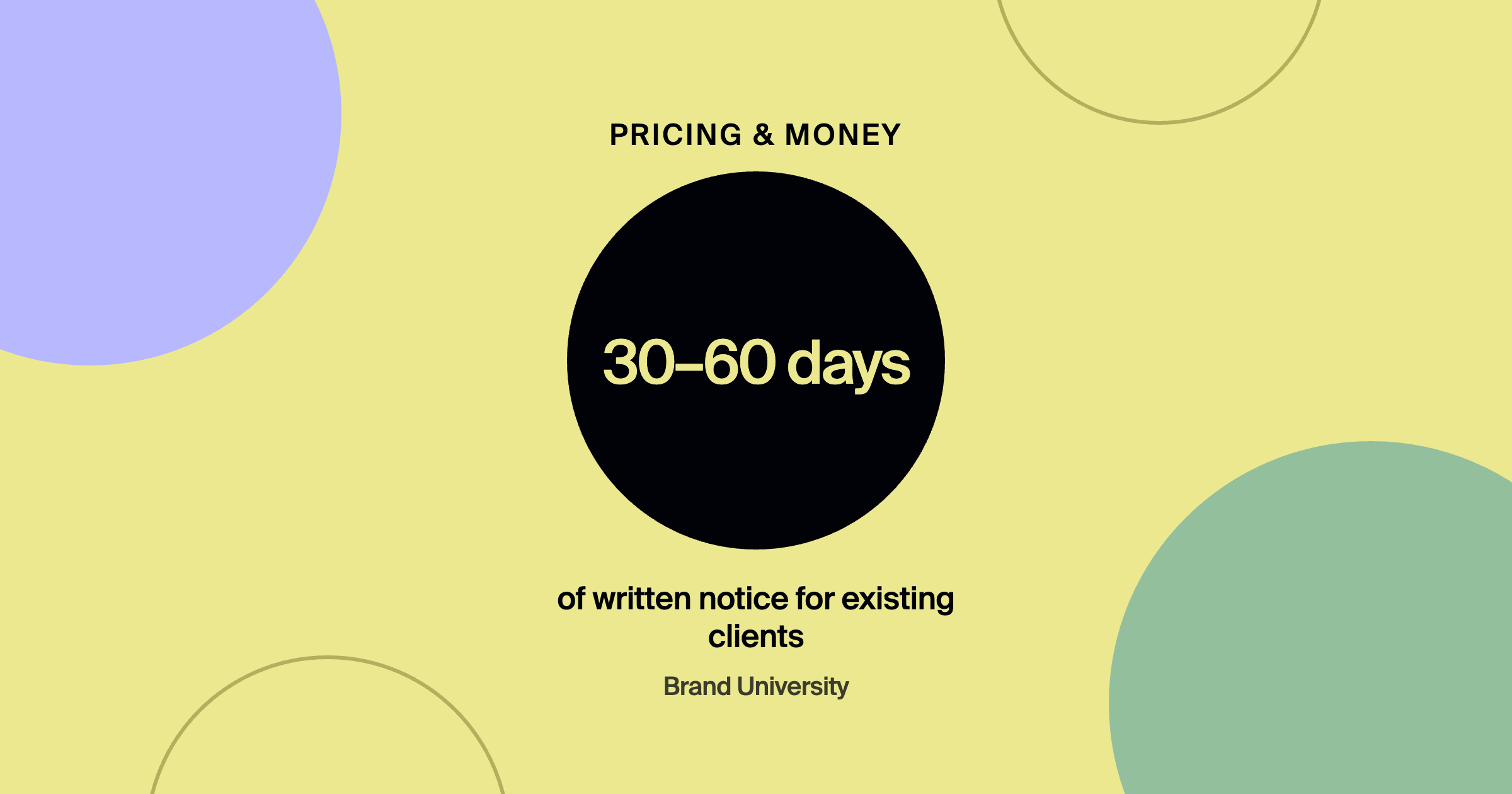


The short answer: raise prices for new clients first. For existing clients, give 30 to 60 days' written notice, explain what's improved, offer a choice like locking in current rates for a prepaid period or adjusting scope, and then hold steady. Most good clients stay.
Raising rates doesn't have to mean losing clients. Here's how to do it without the awkward conversation you're dreading.
Key takeaways
- New clients are the easiest place to start.
- Existing clients deserve advance notice.
- Tie the increase to value, not your costs.
- Options make the change easier to accept.
- Confidence matters as much as the number.
When should a designer raise prices?
Common signals: you're booked solid, you close nearly every proposal, your skills and results have grown, or you're overworked for the income. If most prospects say yes without hesitation, your price is probably low.
How should you raise prices for existing clients?
With written notice, usually 30 to 60 days: Starting March 1, our rates for ongoing work will increase to X. I wanted to give you plenty of notice and thank you for working together. Keep it short and confident. No long justification or apology needed.
How do you explain a price increase?
Focus on value: improved process, faster turnaround, better results, or expanded capabilities. Avoid leading with your costs going up. Clients care about what they get.
Should you offer options?
Yes. For example: lock in the current rate by prepaying for the next quarter, or keep the current price with a slightly adjusted scope. Options give clients control and make the change feel collaborative.
- Start with new clientsThe easiest place to raise rates.
- Give written noticeUsually 30 to 60 days for existing clients.
- Explain the valueImproved process, faster turnaround, better results.
- Offer optionsLock in by prepaying a quarter, or adjust the scope.
- Hold steadyShort and confident, with no apology.
What if a client leaves over a price increase?
Some might, and that's often a sign the relationship was underpriced. Losing one low-paying client frequently frees time for better-paying work. It also helps to publish clear pricing going forward, as branded by does with its public pricing tiers, so new clients start at the right number.
If you're nervous about raising rates, you're probably starting from too low. Here's why most designers are undercharging.
Not sure how far to raise your rates? Get a number to aim for. The free design pricing calculator gives you a price to quote for any project type based on your experience, the client, and what you need to earn this year. No email required.
Frequently asked questions
How much should I raise my prices?
Many designers raise 10 to 25 percent at a time, then adjust based on close rates.
How often should designers raise rates?
Review annually, and raise whenever demand or skill meaningfully increases.
Should I grandfather long-term clients?
You can for a set period, but set an end date so rates don't stay frozen indefinitely.
Where to go from here
Pricing strategy is covered inside Brand University. Pair this with Imposter Syndrome and the Designer Who Won't Raise Prices, and join Brand University on Skool.
About the author
Evan Barnes is the founder of Brand University and of branded by, a brand-first growth agency based in Greenville, South Carolina. He built Brand University to teach designers the business side of design, from positioning and pricing to running client work, and more than 1,200 designers now learn inside the Brand University community on Skool.