Why You Should Always Ask for a Deposit (And How Much)
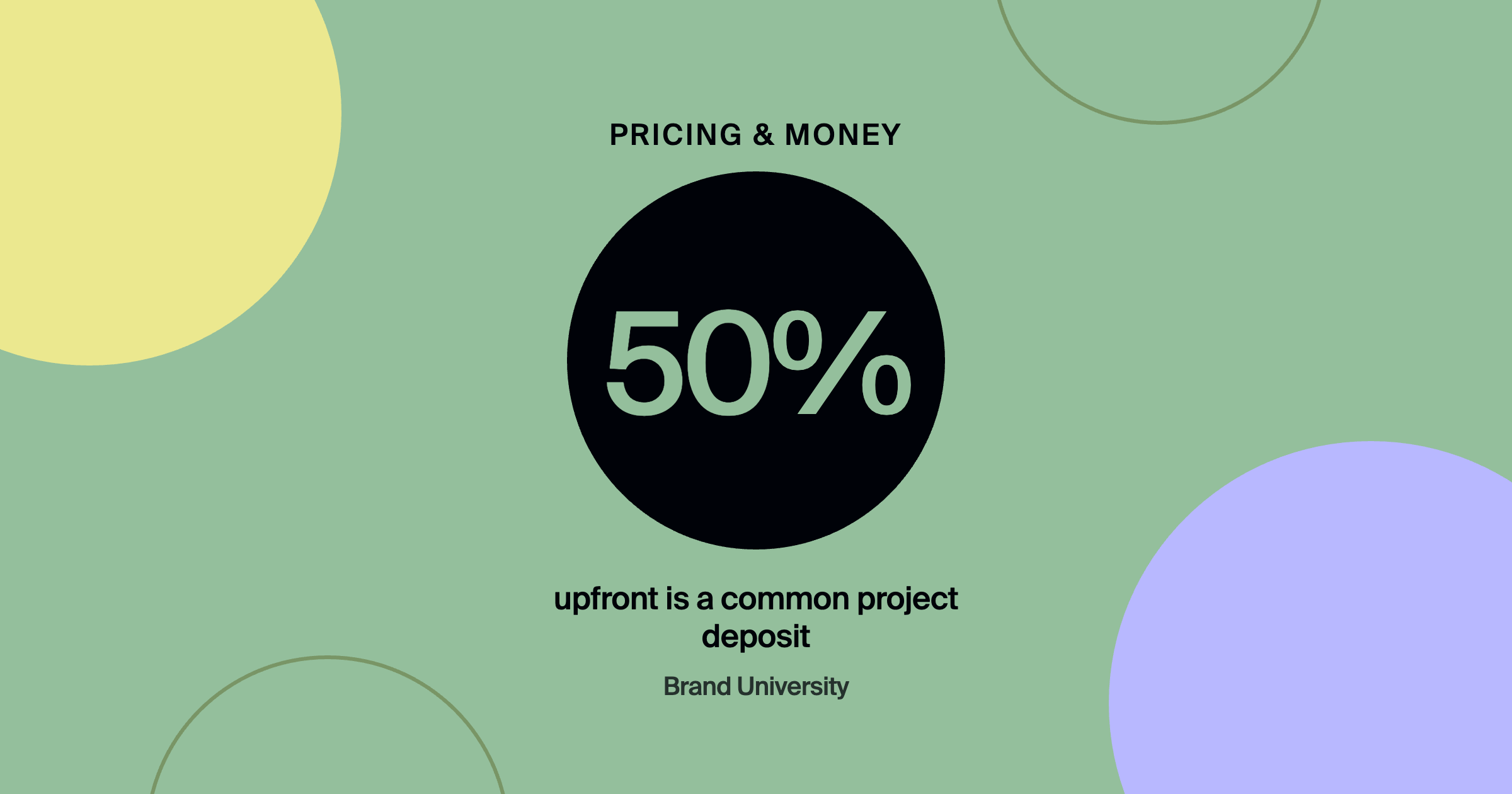


The short answer: always require a deposit before starting work. Fifty percent upfront is common for projects, with the balance tied to milestones or delivery. Larger projects often use smaller deposits with more milestone payments. Deposits protect cash flow, commit the client, and filter out people who aren't serious.
A deposit isn't just about cash flow. It tells you who's a serious client before you've invested a single hour.
Key takeaways
- No deposit, no start date.
- Fifty percent is a common default for projects.
- Larger projects can use milestone payments.
- Deposits filter unserious clients early.
- Professional clients expect them.
Why should designers require a deposit?
Because it protects you from doing work that never gets paid, secures the client's commitment, and helps cash flow. It also changes behavior: clients who've paid tend to show up to meetings and give feedback on time.
How much deposit should a designer ask for?
Fifty percent upfront is a common starting point for projects. For larger engagements, many designers use a schedule like a third at signing, a third at a midpoint milestone, and a third at delivery. For retainers, bill monthly in advance.
Common deposit structures
| Work type | How it's usually paid |
|---|---|
| Most projects | Half upfront, balance at milestones or delivery |
| Larger engagements | A third at signing, midpoint and delivery |
| Retainers | Billed monthly in advance |
| Very small projects | Full payment upfront |
Is the deposit refundable?
Usually not, because it reserves your time and covers early work. State this clearly in your contract. The Contract Clauses Every Freelancer Skips covers deposit and kill fee language.
What if a client refuses to pay a deposit?
Treat it as a warning sign. Professional clients expect professional terms. Resistance to a deposit often predicts resistance to paying later. Five Red Flags a Client Will Be a Nightmare covers related signals.
How do you make deposits easy to pay?
Put the deposit invoice and online payment link right in the proposal, so signing and paying happen in one step. Tie the project start date to receipt of payment. Clear, upfront pricing also makes deposits feel expected. branded by lists its pricing tiers publicly, so clients know the numbers before they reach the proposal.
A deposit only protects you if the total is right to begin with. The free design pricing calculator gives you a price to quote for any project type based on your experience, the client, and what you need to earn this year. No email required.
Frequently asked questions
Should small projects require a deposit?
Yes. For very small projects, many designers ask for full payment upfront.
Can I start work before the deposit clears?
Best practice is no. Start the day payment arrives.
How do deposits work for retainers?
Bill each month in advance, so the retainer is always prepaid.
Where to go from here
Payment terms are covered inside Brand University. Pair this with What to Do When a Client Won't Pay on Time, and join Brand University on Skool.
About the author
Evan Barnes is the founder of Brand University and of branded by, a brand-first growth agency based in Greenville, South Carolina. He built Brand University to teach designers the business side of design, from positioning and pricing to running client work, and more than 1,200 designers now learn inside the Brand University community on Skool.